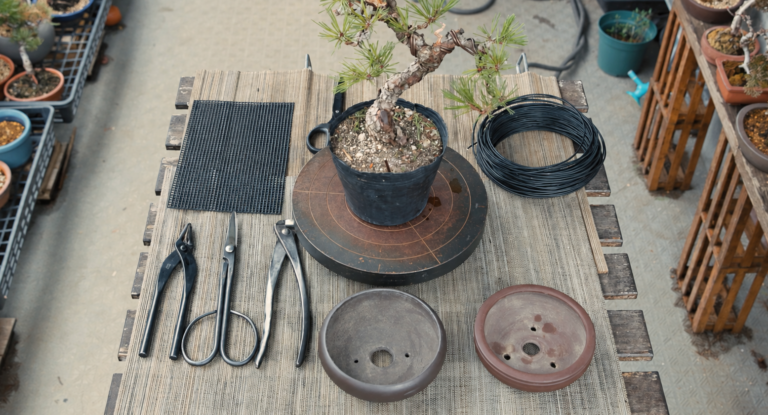
Bonsai concave cutters remove unwanted branches at their base and reduce the stubs left behind. They are used to refine the number and placement of branches as you develop a tree’s structure. This guide explains their uses and how to choose them, with four models that differ in shape, size, and material.
This article contains advertising and affiliate links.
Uses / How to Choose / Four Models Compared / Use and Care
What Are Bonsai Concave Cutters Used For?
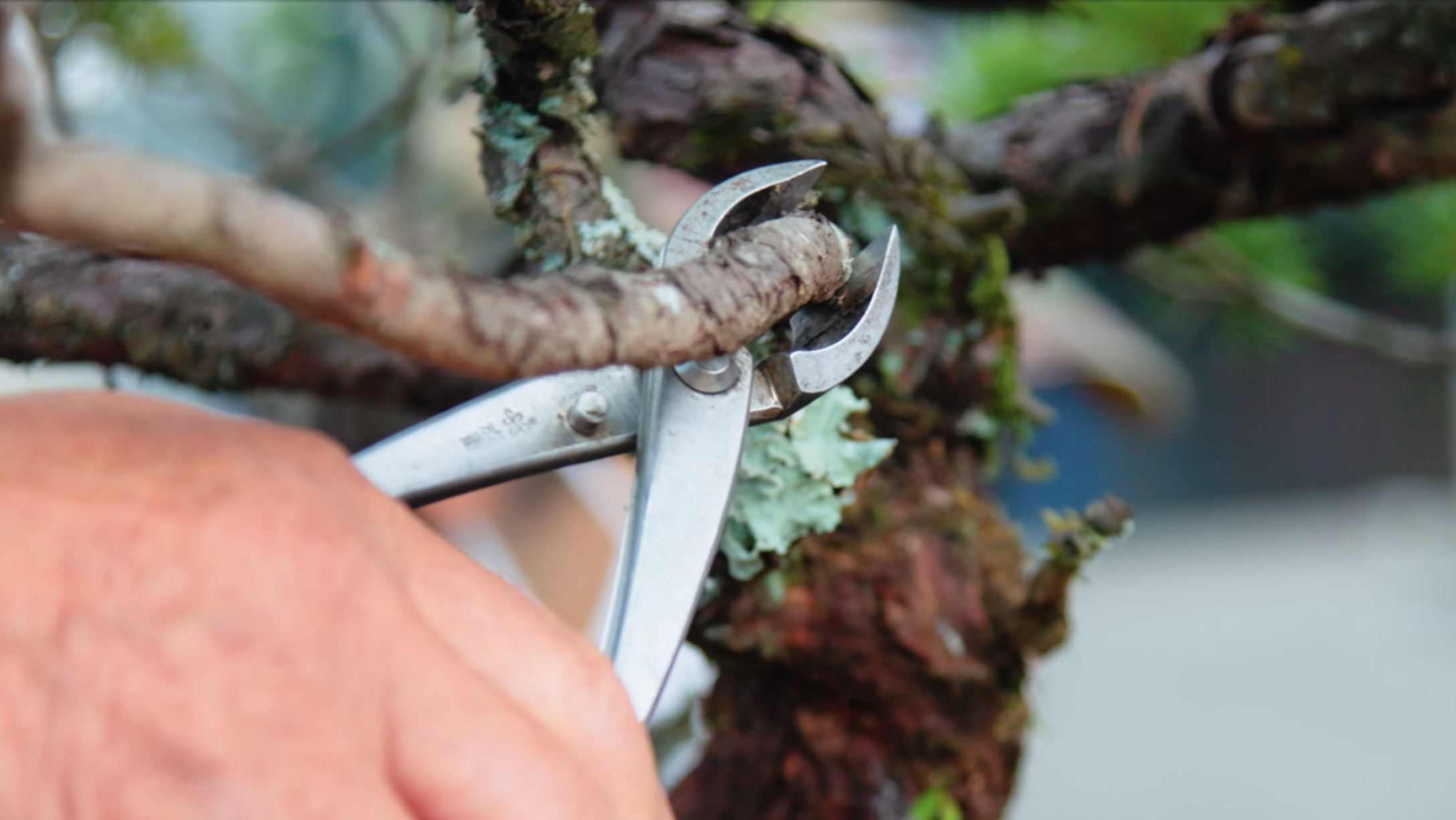
Concave cutters grip the base of an unwanted branch between opposing blades and remove it where it joins the trunk or another branch. They leave a recessed cut, aiming to make the remaining projection less noticeable once new tissue covers the wound.
Wound closure occurs as new tissue grows from the edges of a cut to cover it. The result also depends on the species, tree vigor, and wound size, so a deeper cut is not always better.
- To shorten a branch: Use bonsai scissors or pruning shears. For detailed work on shoots and foliage, use trimming scissors.
- To remove an unwanted branch at its base: Use concave cutters.
- To refine remaining stubs or cuts: Use knob cutters. Add them when there are areas your existing concave cutters cannot finish adequately.
How to Choose Bonsai Concave Cutters
First check the thickness at the branch’s base and the space available for the blades. Along with the manufacturer’s stated cutting capacity, check whether the cutting head’s width and thickness allow it to fit between nearby branches. Overall length alone does not tell you how thick a branch the tool can cut. Compact or narrow-head models are also worth considering for small trees and crowded areas.
Choose standard or round-edge blades with wound refinement in mind. Standard models have relatively straight cutting edges and are an option when choosing a basic tool for branch removal. Some round-edge models have rounded tips and thinner blades designed to reduce subsequent reshaping of the cut. Even with round-edge blades, inspect the actual cut to decide whether further finishing is needed.
Compare materials for rust resistance and budget. Steel models need protection against rust. Consider stainless steel if rust resistance is a priority. Sharpness and cutting capacity are not determined by the material name alone, so narrow the choice by shape and size before comparing materials and prices.
Four Models Compared by Shape, Size, and Material
| Model | Shape, Material & Overall Length | Reason to Choose |
|---|---|---|
| Kikuwa Concave Branch Cutter, Small 1205 | Standard; steel Approx. 170 mm | Compact size for easier handling |
| Kikuwa Concave Branch Cutter, Large 1204 | Standard; steel Approx. 205 mm | A basic tool for branch removal |
| Kikuwa Stainless Steel Concave Branch Cutter, Large 3201 | Standard; stainless steel 205 mm | Standard shape with rust resistance |
| Kaneshin Round-Edge Concave Cutter, Large No. 4 | Round-edge; steel 200 mm | Less subsequent reshaping of the cut |
Kikuwa Concave Branch Cutter, Small 1205

The manufacturer’s stated cutting capacity is living branches up to 7 mm thick. A smaller standard model than the 1204, it is an option for those who prioritize maneuverability around small trees or crowded areas. Check the space available for the cutting head and the branch’s thickness at its base before choosing.
Check price and availability on eBay →
Kikuwa Concave Branch Cutter, Large 1204

Approximately 186 g, with a stated cutting capacity of living branches up to 10 mm thick. Consider this model if you want a basic tool for branch removal and are prepared to clean and protect it against rust after use.
Check price and availability on eBay →
Kikuwa Stainless Steel Concave Branch Cutter, Large 3201

175 g, with the same cutting guide as the 1204: living branches up to 10 mm thick. It suits users who want a standard branch-removal tool in a more rust-resistant material. Compare the material and current price with the 1204.
Check price and availability on eBay →
Kaneshin Round-Edge Concave Cutter, Large No. 4

Blade length: 25 mm. Its rounded tips and blades thinner than the straight-edge type are its defining features. Kaneshin describes this shape as a way to reduce subsequent reshaping with a carving knife or similar tool. Consider it if you want to account for wound refinement as well as branch removal.
Check price and availability on eBay →
Using and Caring for Bonsai Concave Cutters
Before starting, decide which branches to remove and which to keep, matching the timing and amount of pruning to the species and tree vigor. If a long branch or its foliage obstructs the work, shorten it first with suitable scissors or a saw to create space and a clear view of the branch’s base.
Grip the branch’s base from an angle where the blades will not strike the trunk or nearby branches, and cut by closing the blades. Avoid forcing a cut with the tips alone or twisting the tool to snap off a branch. Do not apply cutting guidelines for live wood to hard dead branches. Use a suitable saw or another appropriate tool for thick or hard branches, and wire cutters for wire.
After cutting, inspect the remaining stub and refine only what is needed, a little at a time. Avoid making a large cut into the trunk in one movement. Judge the depth of the recess and any wound protection according to the species and wound size.
How to protect pruning wounds with cut paste →
After use, remove sap and wood debris from the blades and around the pivot, then wipe away moisture. Protect steel models with an appropriate rust-preventive oil and store them somewhere dry. Stainless steel still needs cleaning and drying. If you work on a tree with suspected disease, disinfect the tool using a suitable method before moving to another tree.
If the blades are chipped or misaligned, or the tool does not open and close properly, ask the manufacturer or retailer about sharpening or repair.