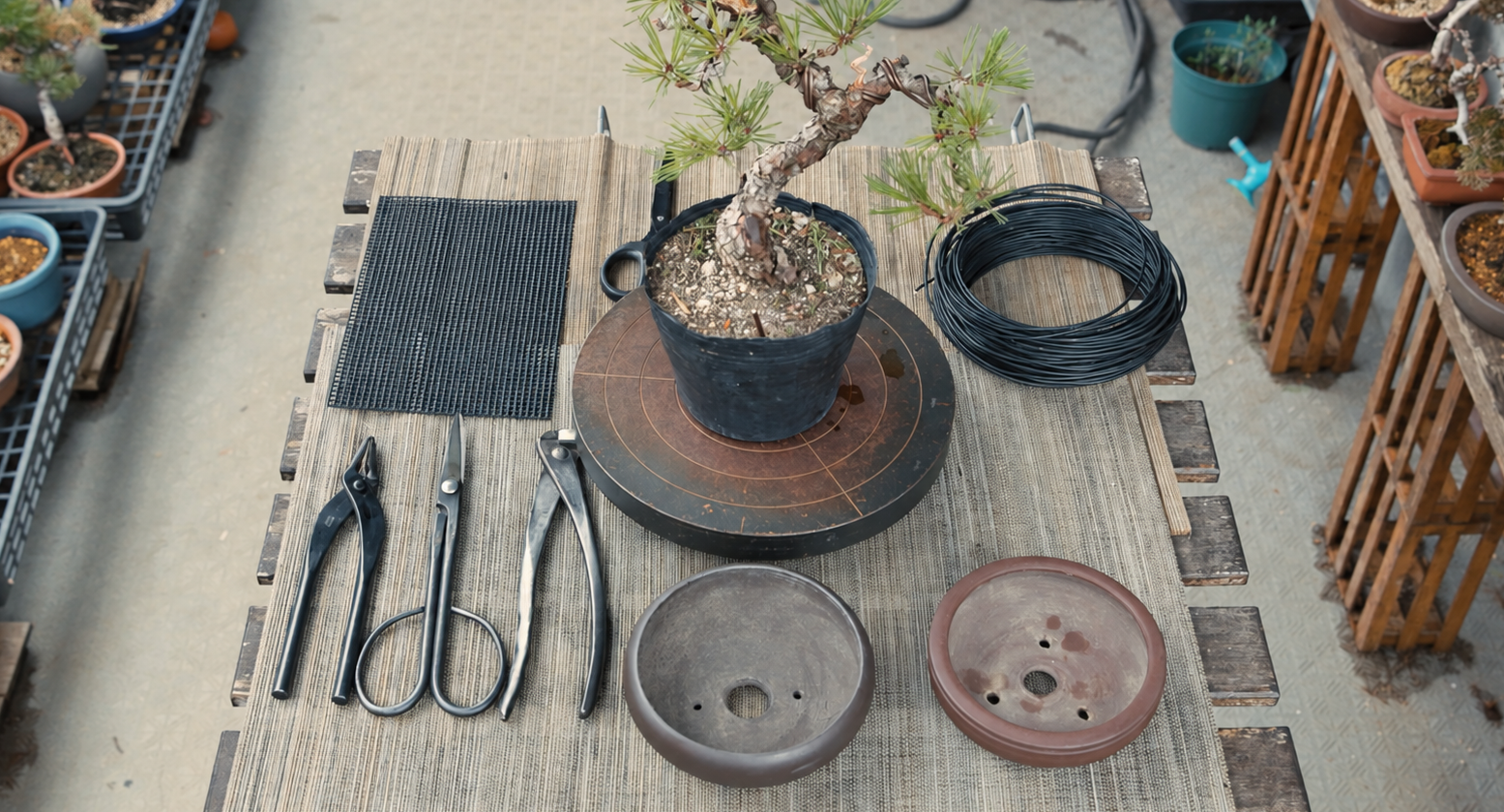
Bonsai repotting supplies include a suitable pot and soil, drainage mesh and tie-down wire. Understand what each item does and choose them to suit the species, pot size and growing conditions.
This article contains advertising and affiliate links.
Pots / Soil / Drainage Mesh / Tie-Down Wire / Before You Begin
Preparing the Pot
You can reuse the current pot when repotting. If choosing a new one, consider a size and depth suited to the tree and its roots, along with a color and shape that complement the tree.
Before use, clean the pot and check its drainage holes and where you will thread the tie-down wire.
You can also find BCT original bonsai pots in our online shop.
Soil for Repotting
Soil supports the roots and retains moisture while allowing excess water to drain and air to circulate. Bonsai soil often combines granular materials with different properties, and premixed bonsai soils are also available.
Common Soil Components and Their Roles
Akadama
Akadama retains moisture while providing aeration, making it a base component in soil mixes for a wide range of species.

View Ibaraki Hard Akadama, Small Grain, on eBay
View Ibaraki Hard Akadama, Medium Grain, on eBay
View Ibaraki Hard Akadama, Large Grain, on eBay
Kiryu
Kiryu is mixed with akadama and other soil components to improve drainage and aeration. It is also used in mixes for conifers such as pines and shimpaku junipers.

View Japanese Kiryu Soil, Small Grain, on eBay
Kanuma
Kanuma is acidic and is used for acid-loving species, including satsuki and other azaleas. It can be used on its own or blended with other soil components.
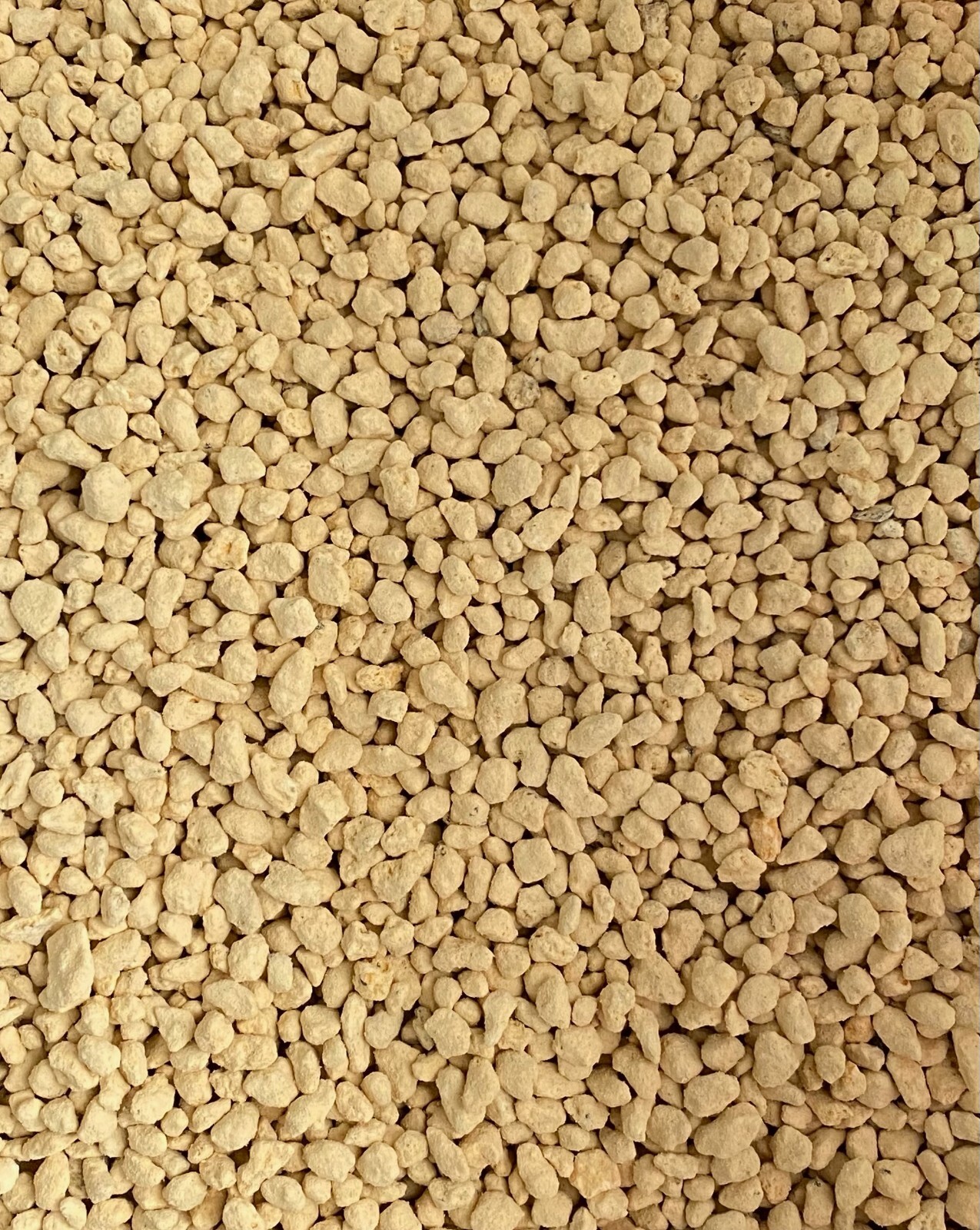
View Japanese Kanuma Soil, Small Grain, on eBay
Matching the Soil to the Species and Growing Conditions
For pines and shimpaku junipers, prioritize drainage; for maples, consider the balance between moisture retention and drainage. Kanuma-based mixes are used for satsuki and other azaleas.
Even within the same species, pot size and depth, sunlight and airflow affect how quickly the soil dries. Adjust the mix and particle size based on how your pots dry and how often you water.
When choosing a premixed soil, also check the intended species and particle size.
Particle Size and Removing Fines
In general, finer particles tend to retain more moisture, while coarser particles allow better drainage. For shohin bonsai, particles around 1–3 mm can serve as a starting point, but choose a size that suits the pot and how quickly the soil dries.
Sift the soil before use to remove dust and fine particles. Too many fines can restrict drainage and aeration.
Drainage Mesh: Its Role and Preparation
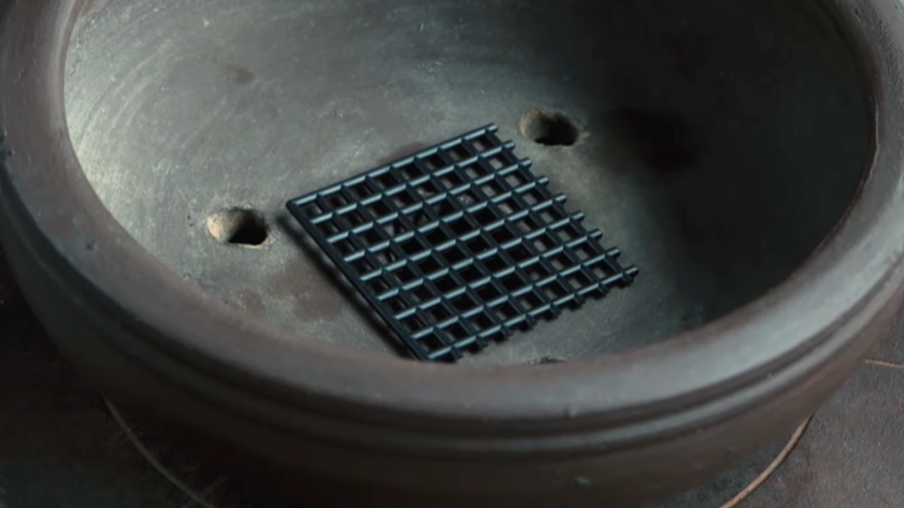
Drainage mesh keeps soil from falling through the holes in the bottom of the pot. Choose a mesh fine enough to retain the soil you are using, then cut it slightly larger than each hole to cover it.
Secure the mesh to the pot with short pieces of wire so it does not shift during planting. Prepare these separately from the tie-down wire used to secure the tree.
View Japanese Plastic Drainage Mesh (5 Sheets, Regular) on eBay
Tie-Down Wire: Its Role and Preparation
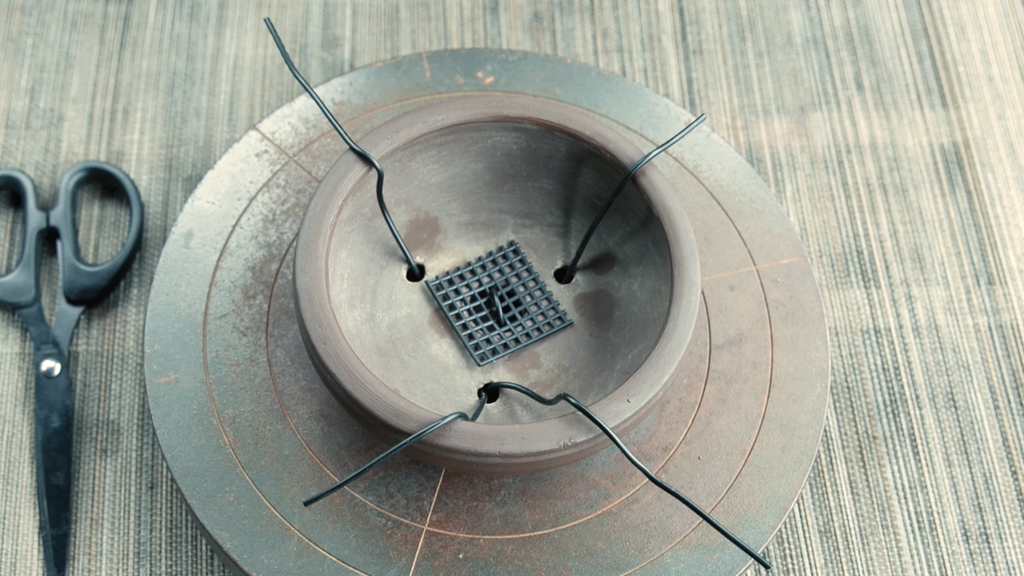
Tie-down wire secures the tree to the pot so it does not wobble in the wind or during watering.
Thread the wire through the pot’s tie-down holes or drainage holes, allowing enough length for the spread of the roots and the planting position. Use a pliable material such as aluminum wire, and fasten it where it will not damage the roots.
View Premier Bonsai Aluminum Wire, 100g, on eBay
For guidance on thickness and handling, see our guide to choosing bonsai aluminum wire.
Before You Begin
Sift the soil, attach the drainage mesh and thread the tie-down wire before removing the tree from its pot.
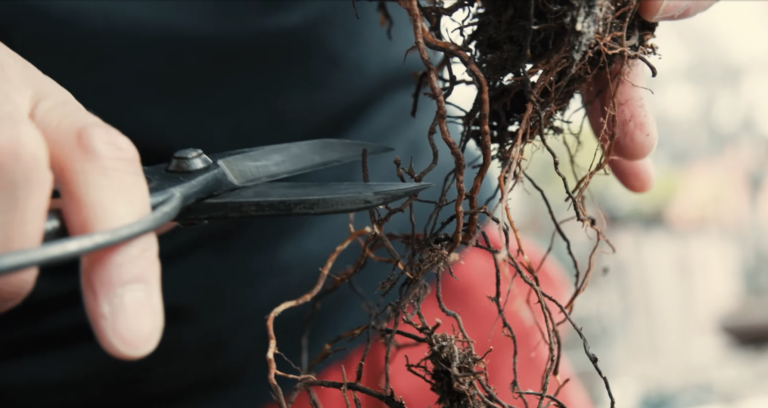
Along with root hooks and rakes for loosening roots and root pruning scissors for trimming them, keep bamboo chopsticks for working soil between the roots and watering tools close at hand.
Watch the video below for a practical example of bonsai repotting.
For other tools used in repotting, see our bonsai tools guide.