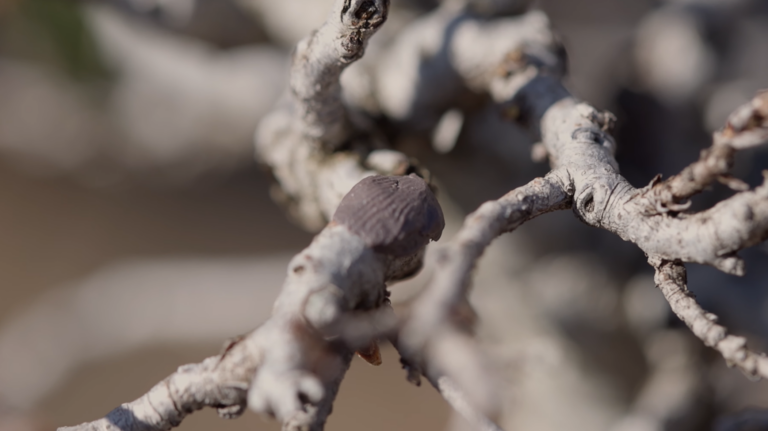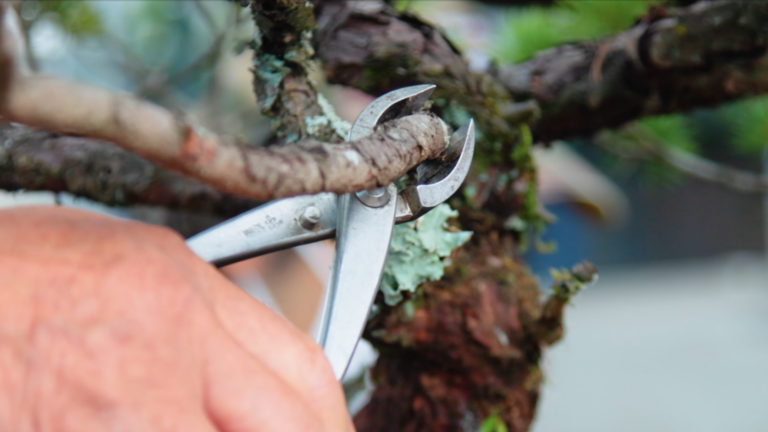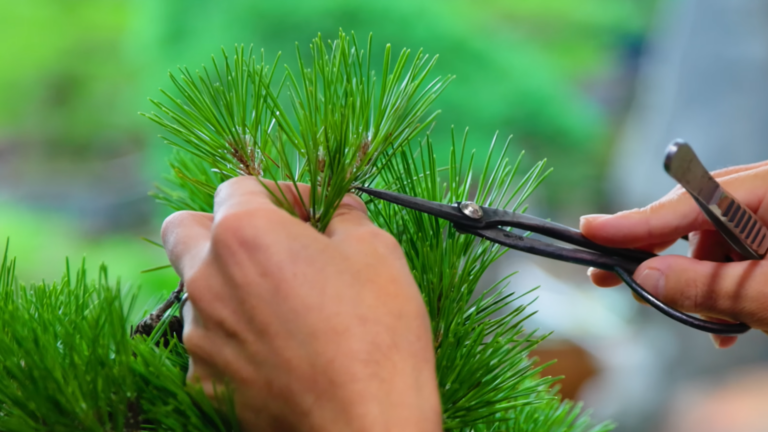
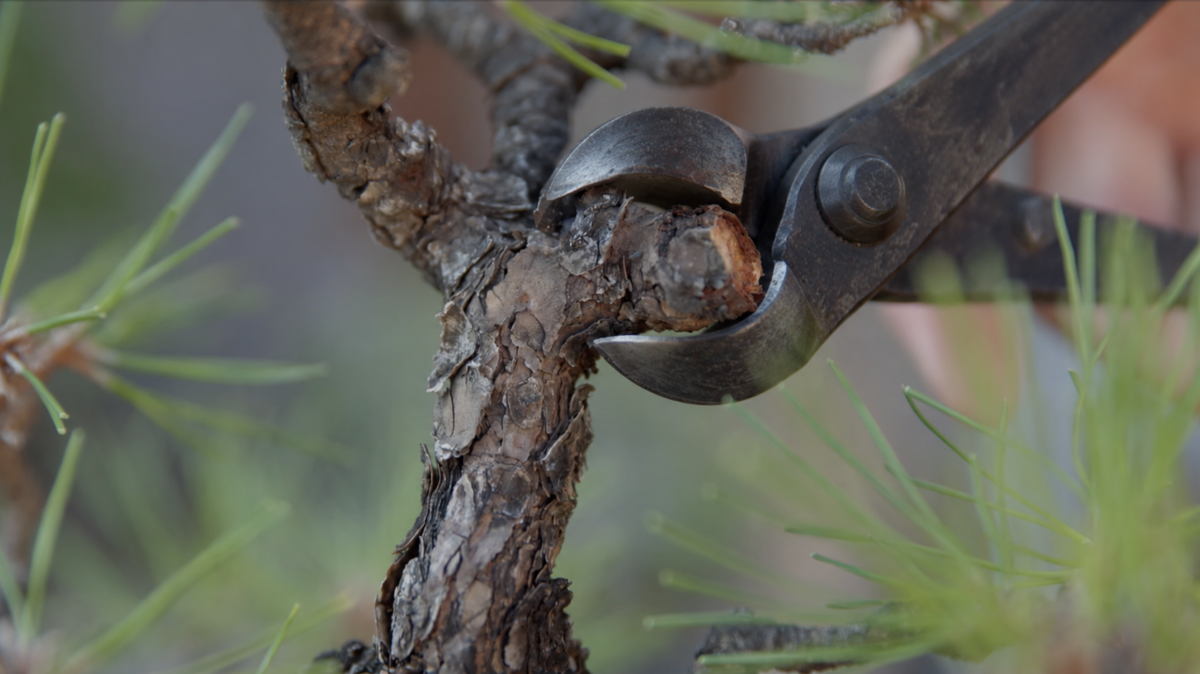
After removing a branch, you may find a stub still protruding from the trunk, with too little space to position your concave cutter neatly around it. A knob cutter is useful for refining this kind of cut.
When choosing one, consider both the size of the wood you need to remove and whether the blades can fit between nearby branches and cut away small amounts at a time. This guide explains how knob cutters differ from concave cutters, what to look for, and the features of three models in different sizes and materials.
This article contains advertising and affiliate links.
Uses and tool differences / What to look for / Three models / Use and care
What a knob cutter does: removing branch stubs and woody protrusions
A knob cutter removes stubs left after pruning and unwanted woody knobs. Its opposing, rounded blades cut out wood to leave a concave hollow. It is useful when a branch has already been removed with a saw or concave cutter and the remaining stub needs further work.
Recessing the cut makes room for the tissue that will grow over the wound, helping you work toward a smooth trunk outline. The result also depends on the species, the tree’s vigor, and the size of the wound. Judge the depth for the individual tree and cut rather than treating every wound in the same way.
Choosing between concave, round-edge concave, and knob cutters
A useful starting point is to use a concave cutter to remove a branch at its base, then a knob cutter to refine any woody protrusion left behind. Their uses overlap, and a knob cutter can also be used to remove wood at a branch’s base. Choose according to how well the blades fit the cutting position and the tool’s stated working limits.
| Tool | Main use | What to check |
|---|---|---|
| Concave cutter | Removing an unwanted branch at its base | Access to the branch base and the stated branch-cutting capacity |
| Round-edge concave cutter | Removing a branch while creating a hollow cut | Blade curvature and thickness, and the shape of the resulting cut |
| Knob cutter | Removing remaining stubs and woody knobs to refine a pruning wound | Blade size and how easily you can position it around the wood to be removed |
Some round-edge concave cutters can handle work similar to a knob cutter. If you already own one, examine the cut it leaves and check whether its blades can reach any remaining protrusion. If you rarely have difficulty finishing the cut, you may have little need to add a separate knob cutter yet.
For the differences between standard and round-edge blades, see our guide to concave cutters and three model options.
Four things to look for in a knob cutter
1. Match the blade size to the wood you need to remove
First, look at the size of the protrusion and the space around it. For a small stub, choose blades that let you grip the intended area precisely. Blades that are too large may also catch part of the trunk or a nearby branch that you want to keep.
When choosing a smaller cutter, check that you can position its blades securely and keep the cut within the tool’s working limits. For a large stub, consider reducing it first with a suitable saw, then refining what remains.
2. Check room to open the blades and how the handles fit your hand
Overall length gives you a sense of the tool’s size, but access also depends on blade width, thickness, and the shape of the open cutting head. In a crowded area, check whether you can open the blades around the stub and close them again, as well as whether the closed blades will fit.
You also need to be able to close the handles comfortably while the blades are positioned around the wood. Choose a handle opening that suits your hand. When buying online, look at close-up photos of the cutting head and photos of the whole tool. Comparing its length and handle opening with scissors you already own can help you judge the fit.
3. Check the working limits and blade dimensions
Product descriptions may list different measurements, including the size of knobs the tool can handle, branch-cutting capacity, and blade length. Compare the wood you intend to remove with the tool’s stated working limits. Use blade length to judge the size of the cutting head and the area it can reach.
Both Kikuwa models featured here are intended for knobs measuring 10 mm or less. Hard, dry stubs put more load on the blades, so wood of the same size can vary in how easily it cuts. If you need to squeeze hard to make the blades advance, reconsider their position and the amount of wood you are gripping, or switch to a more suitable tool.
4. Choose material according to rust resistance and budget
For steel tools, basic care means removing dirt and moisture after use, then applying a protective film of oil before storage. Stainless steel is an option when rust resistance is a priority. Comparing prices within a similar size and intended use makes it easier to decide how much of your budget to put toward the material.
Sharpness and cutting capacity depend on more than the material name. Check the blade shape and working limits for the task first, then choose the material. Stainless steel tools also need sap and moisture wiped off before storage.
Three knob cutters in different sizes and materials
These three options cover a large steel cutter, a large stainless steel cutter with greater rust resistance, and a compact cutter for small-scale work. Start with a size suited to the cutting position, then consider material and budget within that size range.
| Model | Material and overall length | When to consider it |
|---|---|---|
| Kikuwa Knob Cutter, Large 1221 | Steel; approx. 210 mm | A large cutter for knobs of 10 mm or less, with budget in mind |
| Kikuwa Stainless Steel Knob Cutter, Large 3204 | Stainless steel; 205 mm | A large cutter when rust resistance is a priority |
| Kaneshin Knob Cutter, Small No. 9 | Steel; 150 mm | Small branch stubs on miniature and shohin bonsai |
Kikuwa Knob Cutter, Large 1221: a large steel tool for refining stubs
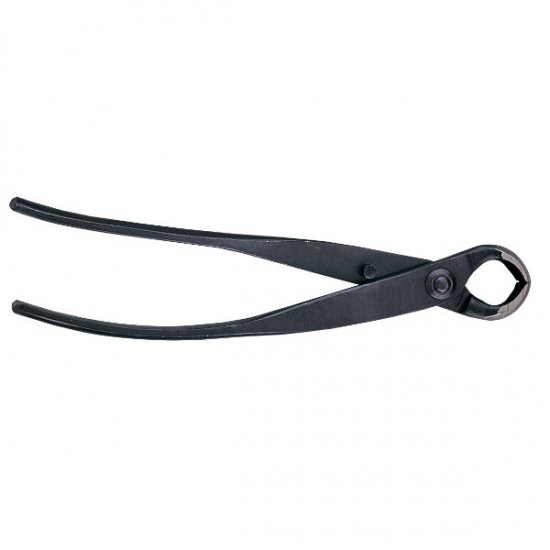
This steel knob cutter measures approximately 210 mm overall. Its rounded blades remove woody protrusions left after branch cutting and unwanted knobs. It is intended for knobs measuring 10 mm or less.
It is a large option for refining a branch base after removing the branch with a saw or concave cutter. It suits work where there is room to position the blades around the branch base, and owners who are comfortable wiping the tool clean and protecting it with oil after use. It is also a straightforward option if you already care for steel tools.
Kikuwa Stainless Steel Knob Cutter, Large 3204: for rust resistance
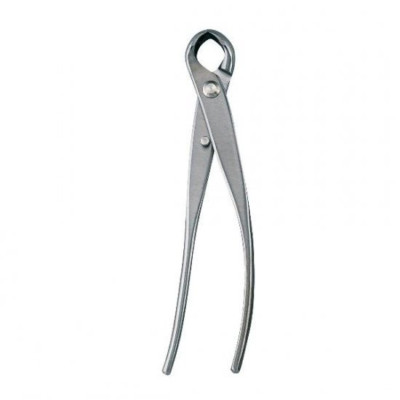
This stainless steel knob cutter measures 205 mm overall. It is a large model for knobs of 10 mm or less, with rust resistance as its defining feature. It suits those who want a corrosion-resistant material for refining protrusions at a branch’s base.
It is worth considering if you use your tools frequently, perhaps while caring for several trees, and rust resistance during storage matters to you. It offers that material choice while still requiring the usual routine of wiping away sap and moisture after use.
Kaneshin Knob Cutter, Small No. 9: for miniature and shohin bonsai

This compact knob cutter measures 150 mm overall, with a blade length of 9 mm. Its size is used for miniature and shohin bonsai, making it an option for small woody protrusions and remaining branch stubs.
Its compact form is useful when you want to position the blades around a small stub at a branch’s base. You might add it alongside a larger cutter for fine finishing work, or consider it as your first knob cutter if you mainly grow small trees. When nearby branches need to be retained, check that there is enough room to open and close the blades at the intended cutting position.
Using and caring for a knob cutter
1. Identify the wood to remove and the trunk to retain
Choose the timing for branch removal and wound refinement according to the species and the tree’s condition. Before starting, examine the cut from several angles to see where the remaining stub ends and where the trunk’s outline lies.
If a long branch or large stub remains, reduce it first with a suitable saw or concave cutter so you can clearly see where to position the knob cutter. Work from an angle that gives the handles room to move without the blades hitting the trunk or branches you want to retain.
2. Remove small amounts and inspect the cut as you go
Position the blades securely around a small amount of the wood you intend to remove, rather than gripping the whole protrusion at once. After each cut, lift the blades away and check the remaining stub and the width of the wound before deciding what to remove next.
The rounded blades can cut into the trunk, so continuing to remove wood simply to make the surface look even can leave a wound wider and deeper than necessary. Once the stub has been dealt with, assess the result against the surrounding trunk outline. Judge the depth of the hollow according to the species and wound size. If you are unsure, ask someone experienced to look at the tree.
Cut by closing the blades rather than twisting the tool to break off wood. Use a suitable saw or another appropriate tool for hard, dead wood or material beyond the cutter’s working limits. Avoid continuing to apply force when the blades will not advance.
3. Distinguish old stubs from new wound tissue
On an older pruning wound, distinguish the remaining woody protrusion from tissue that has grown inward from the wound’s edges to cover it. Avoid treating every raised area along the edge as a stub to be cut away. The species and the condition of the wound determine which areas, if any, need further refinement.
If the wound needs protection, choose a cut paste or other wound sealant suited to the species and the work, and follow the product’s directions. Then monitor the wound and the tree’s growth. Before repeatedly recutting a wound because its shape concerns you, check whether further work is needed.
How to protect pruning wounds with cut paste →
4. Clean the blades and pivot, then dry the tool before storage
After use, remove sap and wood debris from the inner surfaces of the blades and around the pivot, then wipe away moisture. For stubborn sap, follow the directions for a cleaner suitable for cutting tools. Protect steel with a thin film of suitable tool oil, such as camellia oil, and store the cutter in a dry place. Care for the pivot with a recommended oil as well.
Check for chipped edges, changes in how the blades meet, or resistance when opening and closing the tool. A knob cutter depends on the shape and alignment of its opposing blades. If its cutting performance declines, consult the seller or maker about sharpening or repair before attempting to reshape the edges yourself. If the tool has been used on a tree suspected of disease, disinfect it using an appropriate method before moving to another tree.
Choose a cutter for the wound you actually need to refine
A knob cutter is useful when you need to remove woody protrusions left after branch removal. If your existing round-edge concave cutter can also handle the finishing work, use it first and consider adding a knob cutter when you encounter areas it cannot comfortably reach.
Choose in this order: the size of the wood to be removed, the space to open and close the blades, the tool’s working limits, then material and budget. The Kikuwa 1221 is a large steel option, the 3204 suits a preference for rust resistance, and the Kaneshin No. 9 is a compact option for small branch stubs on smaller trees. Match the tool to the actual cutting position, as well as the size of the bonsai you grow.