
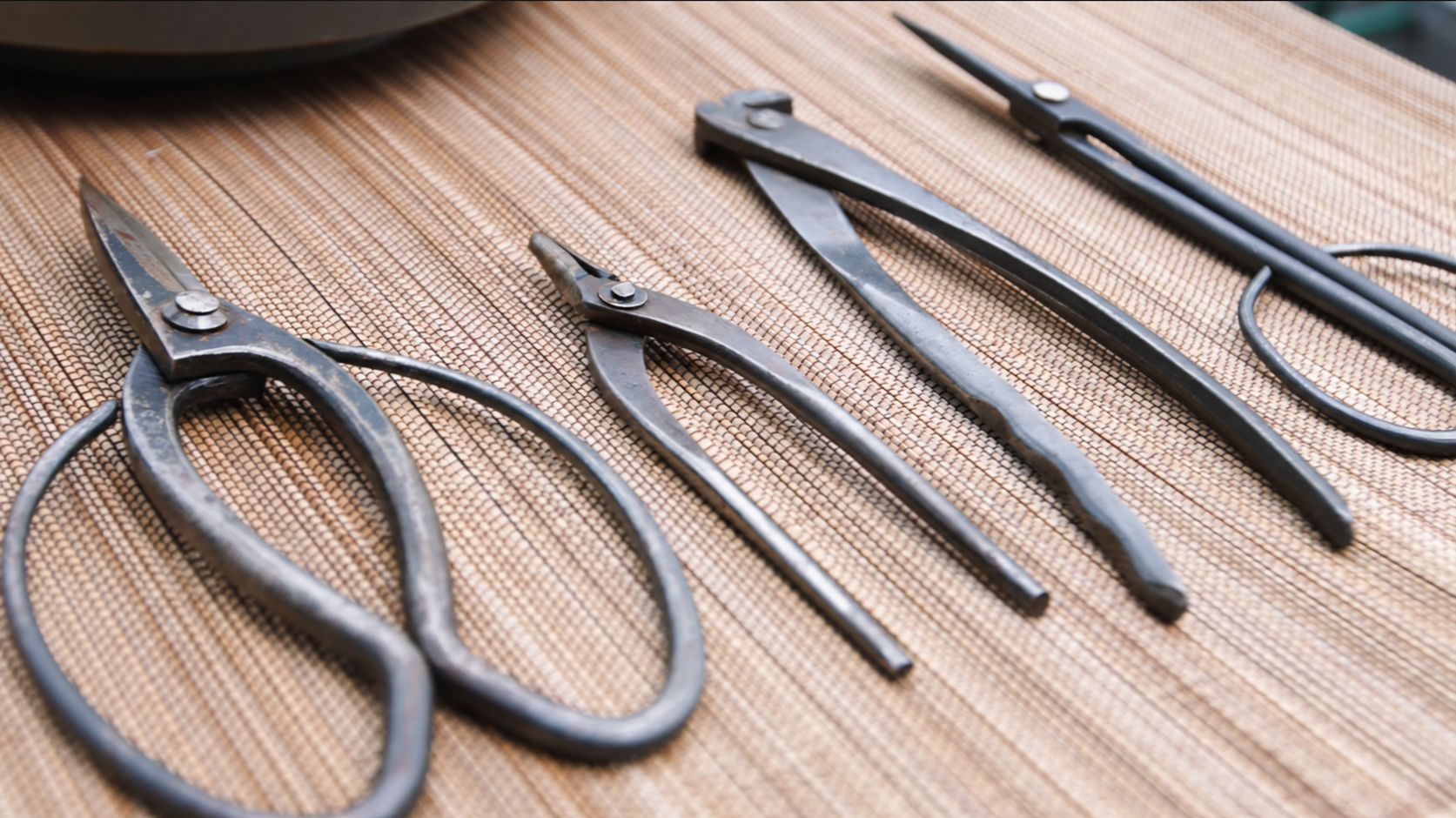
Trimming back new growth and removing unwanted twigs helps keep a bonsai in shape. Bonsai scissors are one of the basic tools used for this regular care.
When choosing a pair, consider both the work you do and how the scissors fit your hand. Your tree’s branching structure and the way you care for it will also influence which shape is easiest to use.
This guide explains what bonsai scissors are used for, when to reach for a different tool, and what to look for when choosing a pair. It also introduces three models to consider for your first purchase or as a replacement.
This article contains affiliate links. BONSAI CLUB TOKYO may earn a commission if you purchase through them.
Choosing the right tool / What to look for / Three models to consider / Care and maintenance
What Are Bonsai Scissors?
Bonsai scissors are mainly used to prune small branches and trim foliage. The traditional style, with its large, rounded handles, is a common choice for a basic pair.
Sharpness matters, but so does being able to guide the blades between branches and cut only what you intend to remove. For thicker branches or delicate work around buds, a different tool may be more suitable.
When to Use Other Scissors and Tools
- Small branches and routine foliage trimming: bonsai scissors. A basic tool for regular maintenance.
- Fine buds and work among closely spaced branches: fine-tip bonsai scissors or bud-trimming scissors. Their slender tips make it easier to reach the spot you want to cut.
- Branches too thick for bonsai scissors: pruning shears. Choose a pair rated for the thickness of the branch.
- Removing branches at their base and shaping the cut: concave branch cutters. These specialized bonsai tools can make a recessed cut where a branch joins the trunk or another branch.
- Pruning roots during repotting: scissors reserved for root work. Soil and grit can damage the cutting edges, so keep these separate from the scissors used for branches and foliage.
You do not need to buy every tool at once. Start with what your trees and the work ahead require.
Four Things to Look for in Bonsai Scissors
1. Room to Reach the Cutting Point
Think about the branches you usually trim. For cutting back small branches, traditional bonsai scissors are a useful starting point. Where branches are closely spaced, finer tips can make it easier to reach the spot you want to cut.
On smaller bonsai, working space can be limited. Check whether wide blades or large handles would catch on nearby branches. The tree’s height alone is not enough to judge by: consider the actual gaps the blades need to fit through.
2. A Comfortable Size and Weight
Your fingers should fit comfortably in the handles, and the scissors should open and close naturally. Two pairs with the same overall length can feel quite different because of their handle shape and blade length.
If you can try them in a shop, gently open and close them to check the fit and weight. When shopping online, compare the overall length and weight, and look for photographs that clearly show the handles and blade tips.
3. Material and Maintenance
Bonsai scissors come in stainless steel, which offers greater resistance to rust, and non-stainless steels that need regular protection against corrosion.
- Choose stainless steel if rust resistance is a priority. It is worth considering if you are concerned about moisture causing rust. You will still need to remove dirt and dry the scissors before storing them.
- With non-stainless steel, make drying and rust prevention part of your routine. Choices range from affordable basic models to scissors made with more specialized blade steels.
Aogami, also known as Blue Paper steel, is a blade steel that also needs protection against rust. It contains chromium and tungsten to improve wear resistance, making it worth considering if edge retention is important to you. Blade shape and finishing also affect cutting performance and handling, so choose the material and shape together.
4. Where to Spend Your Budget
An affordable basic model can be a practical first purchase. As you use it, you will get a clearer sense of what you need—perhaps a lighter pair or slimmer blades—before buying additional tools.
You may instead prefer to spend more from the start on rust resistance or a particular blade steel. Alongside the price, consider whether the scissors suit your work and the maintenance you are prepared to give them.
Three Bonsai Scissors to Consider
A basic pair, a rust-resistant pair, and a pair made with Aogami steel: each of these three models offers a different reason to choose it.
| Model | Material and overall length | Why consider it? |
|---|---|---|
| Kikuwa Dojin 1073 | S58C steel · approx. 180 mm | An affordable basic pair for getting started |
| Kikuwa Stainless Steel 3013 | Stainless steel · approx. 180 mm | Greater rust resistance |
| Kaneshin No. 40F | Aogami steel · 180 mm | Aogami steel for medium-sized and larger bonsai |
Kikuwa Dojin Bonsai Scissors 1073 — An Affordable First Pair
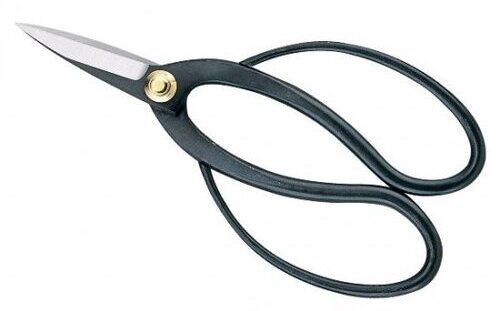
The 1073 is a general-purpose model for pruning small branches and a practical choice for a first pair of bonsai scissors. Weighing approximately 155 g, it suits those who want a basic tool for regular maintenance while keeping costs down.
Check price and availability on eBay
Kikuwa Stainless Steel Bonsai Scissors 3013 — Greater Rust Resistance
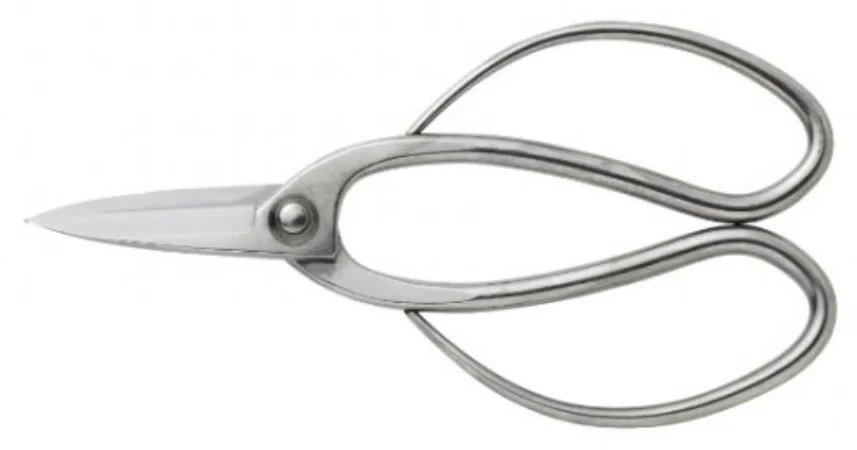
These general-purpose stainless steel scissors weigh approximately 145 g. They combine the traditional bonsai-scissor shape with a more rust-resistant material. When comparing them with the 1073, weigh the difference in material against the price difference at the time of purchase.
Check price and availability on eBay
Kaneshin Bonsai Scissors No. 40F — Aogami Steel for Medium-Sized and Larger Trees
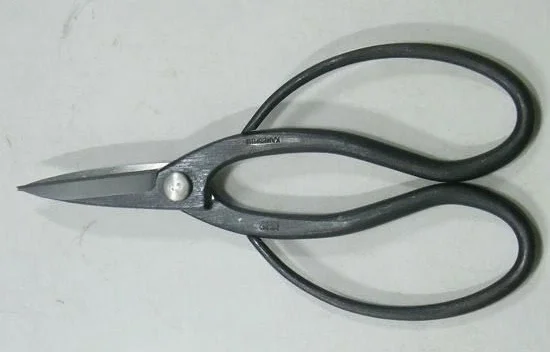
The No. 40F uses Aogami steel and has a blade length of 50 mm. Its traditional bonsai-scissor shape is suited to medium-sized and larger bonsai. It may be harder to maneuver around small trees, so check that there is enough room to work. Consider this model if the size suits your trees and you want a blade steel chosen with edge retention in mind.
Check price and availability on eBay
Caring for Your Bonsai Scissors
After use, remove sap and dirt from the blades and wipe away all moisture. Protect rust-prone steel with a rust-preventive oil suitable for blades, and store the scissors in a dry place.
Twisting or levering the scissors to force a cut can damage the blades. Use wire cutters for wire, and keep each tool to its intended task.
If a blade is chipped or the scissors no longer open and close properly, stop using them and ask the retailer about sharpening or repair.
Choose a Pair That Suits Your Trees and Your Work
For a first pair, look for scissors that reach the cutting point without being forced and feel natural in your hand. Then compare your options by budget, rust resistance, and blade material.
Add finer scissors when you need them for more detailed work, and use suitable tools for thicker branches and roots. Build your toolkit around the care your trees need.