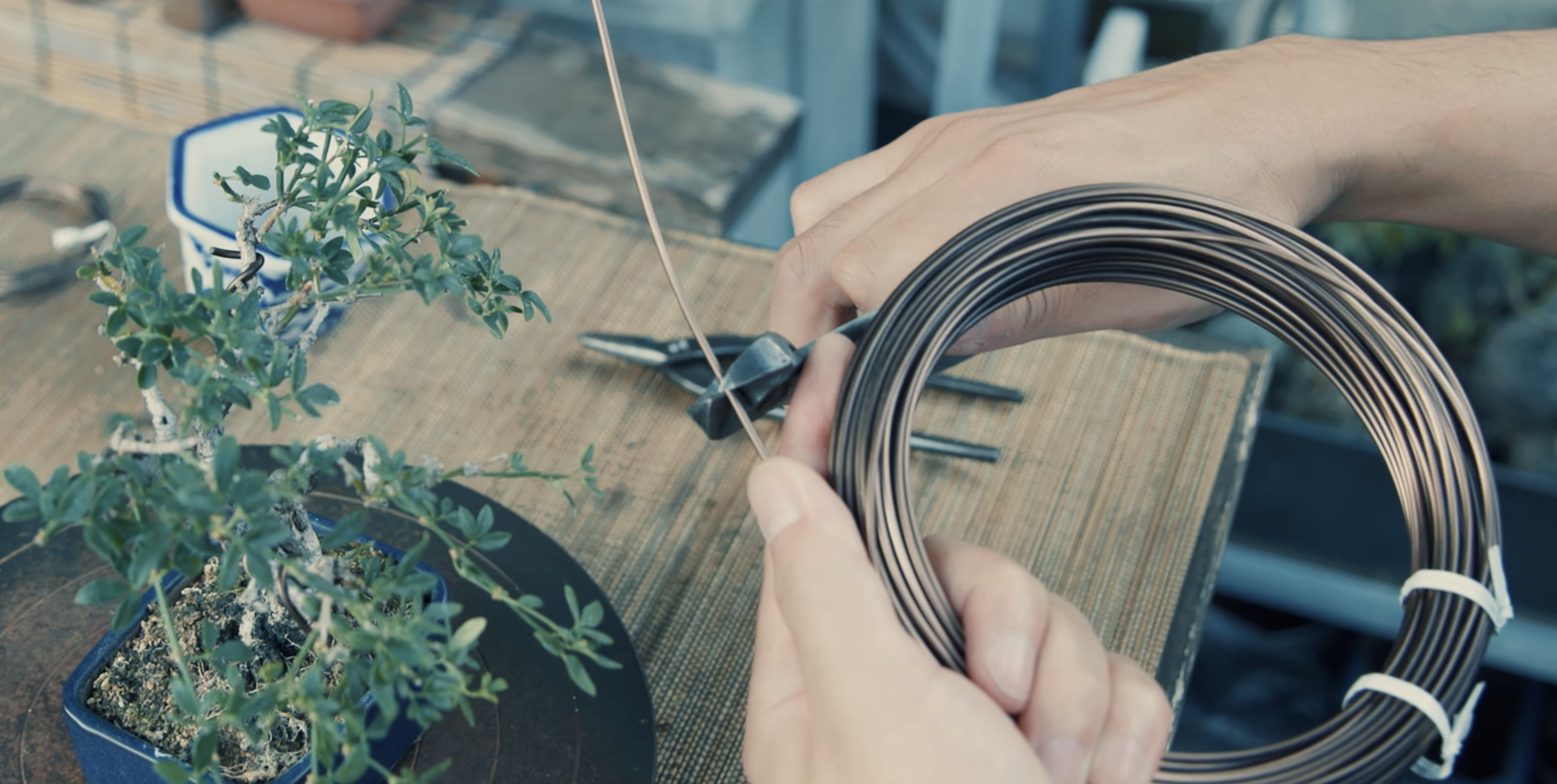
Aluminum wire is wrapped around branches to adjust their direction and angle and hold them in position. Soft and easy to work with, it is a practical option for your first attempts at wiring. Choose a thickness that suits the stiffness of the branch and the holding strength you need.
This article contains advertising and affiliate links.
Uses and materials / Wire Thickness/ Wire options / Use and storage
Aluminum Wire and Copper Wire: When to Use Each
Wiring holds branches in their new position while you develop the tree’s shape. Aluminum wire is softer than copper wire and is easy to work with on deciduous trees and smaller branches.
Copper bonsai wire is used when greater holding strength is needed than aluminum wire of the same thickness can provide. It is often used on pines and junipers, but the tree species alone should not determine your choice. Consider the stiffness of the branch, the holding strength needed, and how easily you can apply the wire.
Choosing Wire Thickness
Use wire roughly one-third to one-half the thickness of the branch as a guide, then check whether it can hold the branch in position. The thickness needed varies with the stiffness of the branch and the bend you want to make. Do not compensate for wire that is too thin by wrapping it more tightly.
You do not need every thickness at the beginning. Start with a small amount of the size that suits your branches, plus the next size up and down. Dark brown or bronze wire can blend in with the bark, but prioritize suitable thickness and ease of handling.
Aluminum Wire Options
| Product | Available diameters | When to choose it |
|---|---|---|
| Aluminum Bonsai Wire, 100g | 1–4mm, in 0.5mm increments | Building a selection of thicknesses in small quantities |
| Aluminum Bonsai Wire, 500g | 1–5mm, in 0.5mm increments, plus 6mm | Replenishing a thickness you use regularly |
Aluminum Bonsai Wire, 100g

A 100g roll lets you build a selection of wire sizes in small quantities. It is an option for your first wiring work or for keeping several thicknesses on hand for shohin bonsai. Choose a diameter from 1–4mm, in 0.5mm increments, on the product page.
View the 100g aluminum wire on eBay →
Aluminum Bonsai Wire, 500g

A 500g roll is useful for replenishing a thickness you use regularly. The product page offers diameters from 1–5mm in 0.5mm increments, plus 6mm. Select the diameter you need when ordering.
View the 500g aluminum wire on eBay →
Using and Storing Aluminum Wire
Choose when to wire according to the tree species and its condition. Anchor the wire securely, for example around the trunk, and wrap it around the branch at roughly a 45-degree angle. Avoid crossing wires, and support the branch as you bend it gradually.
After wiring, check regularly for branch thickening and wire cutting into the bark. Decide when to remove it according to the tree’s growth, rather than a fixed number of months.
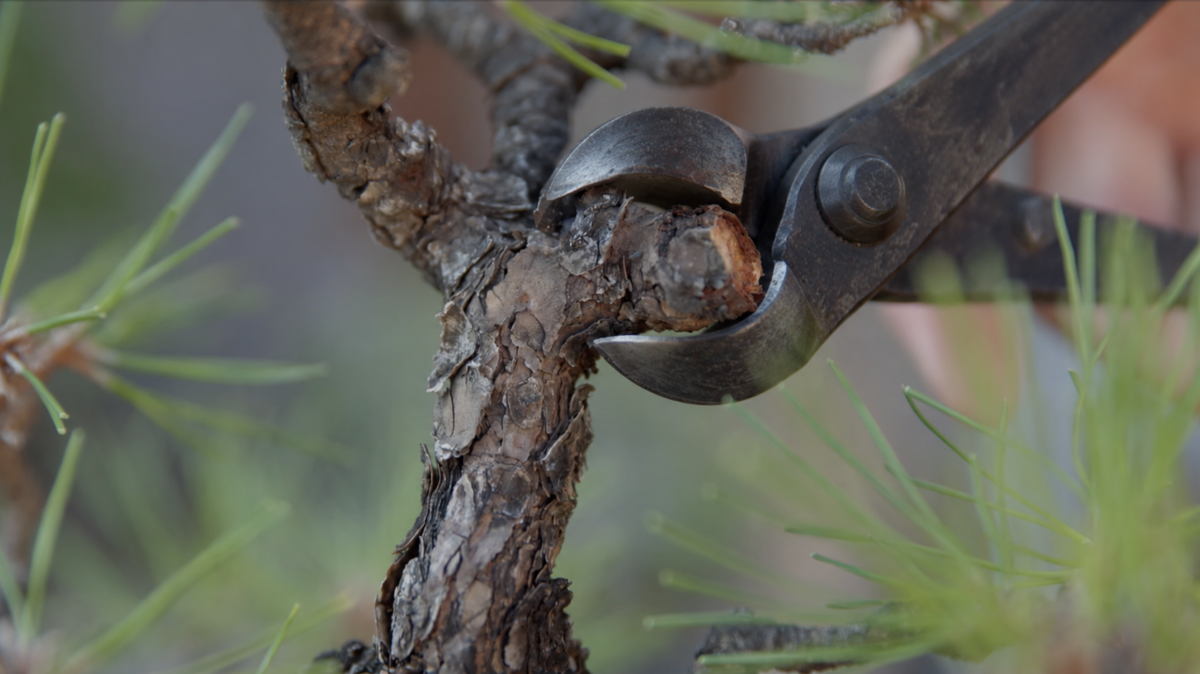
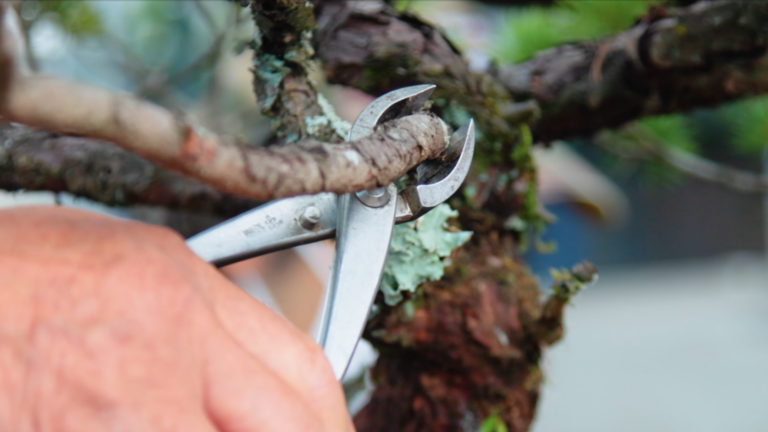
To remove the wire, cut each turn with bonsai wire cutters and take the pieces off gently. Unwinding it can damage branches and buds.
Keep unused wire organized by thickness and stored so it does not tangle. Use wire cutters suited to the material and diameter rather than scissors intended for branches and foliage.
Watch the video below for a practical example of bonsai wiring.