As your work moves from shortening shoots to removing unwanted branches at their base, the cut you leave behind becomes part of the decision. A concave cutter is a bonsai tool designed to remove branches while shaping the cut left behind.
Choose according to the branch’s thickness at the cutting point, the space available at its base, blade shape and material. This guide explains uses and selection criteria, then introduces three models: the standard Kikuwa 1204, the stainless steel Kikuwa 3201 and the round-edge Kaneshin No. 4.
This article contains affiliate links. BONSAI CLUB TOKYO may earn a commission if you purchase through them.
Choosing the right tool / What to look for / Three models / Use and maintenance
What Is a Bonsai Concave Cutter?
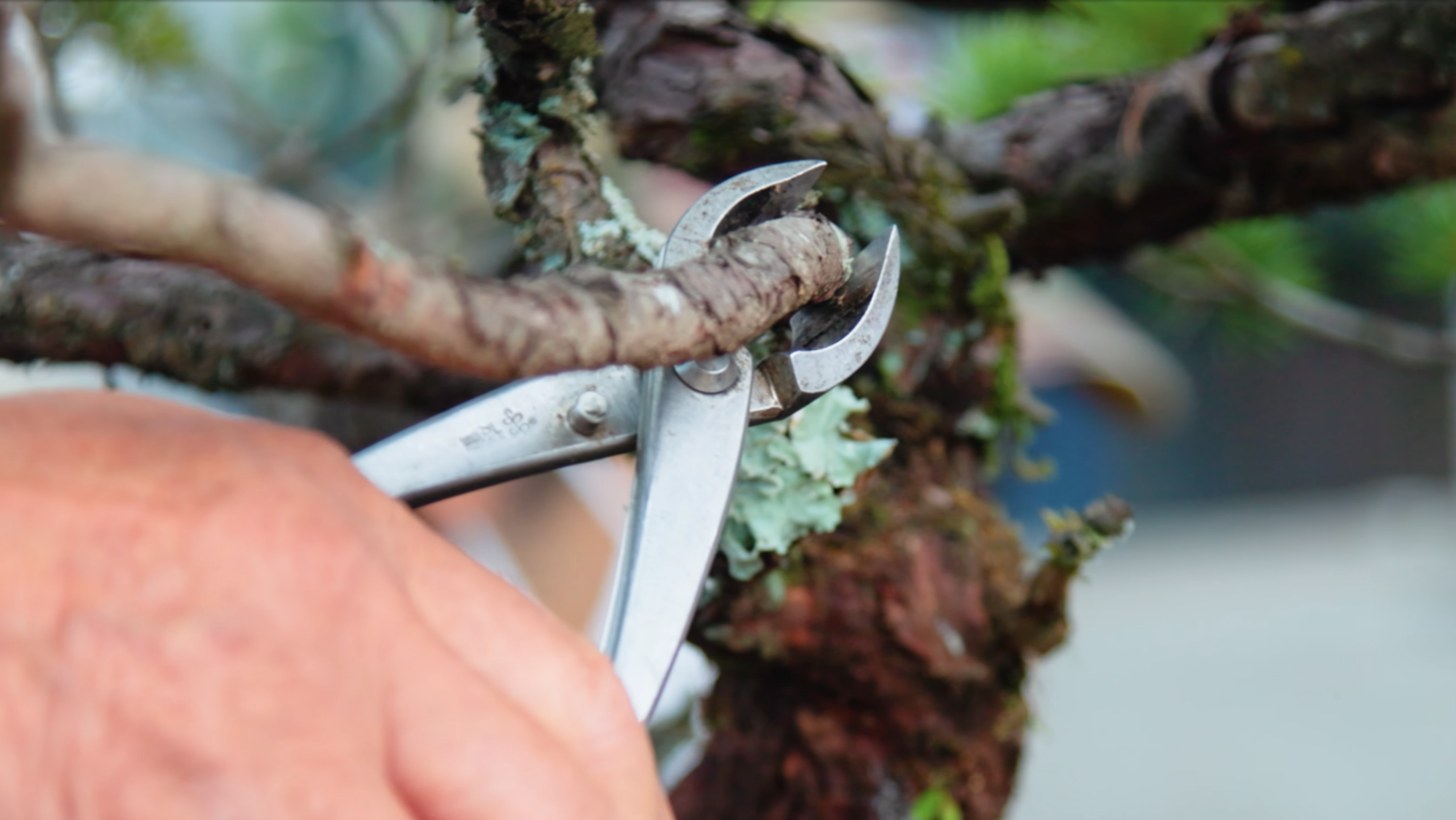
A concave cutter removes an unwanted branch where it joins a trunk or another branch. Its opposing blades cut at the branch’s base and help reduce the projecting stub left after removal.
Unlike ordinary scissors, its shape allows the blades to work at a branch’s base and leave a recessed cut. Both standard and round-edge concave cutters serve this purpose. Alongside removing the branch, they help leave a less prominent stub as new tissue grows over the wound.
Wound closure occurs as tissue grows inward from the edges of a cut. The result depends on the species, the tree’s vigor and the size of the wound as well as the cut itself, so choose the branches to remove carefully and work at an appropriate time.
A concave cutter becomes useful when your work moves beyond shortening growth to reviewing the number and placement of branches and removing unwanted ones at their base.
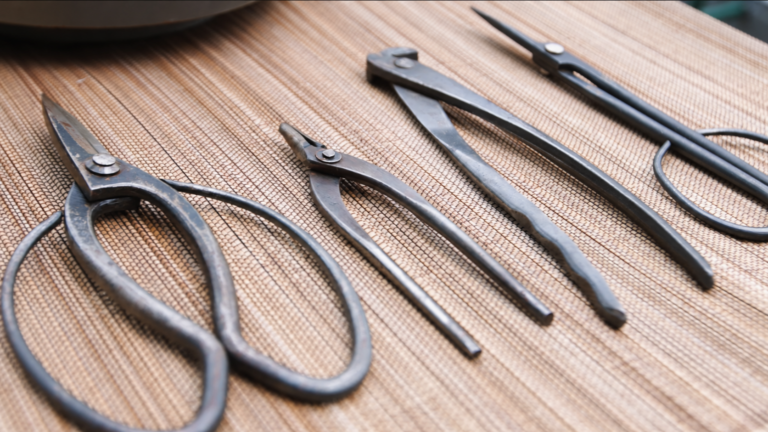
Scissors, Pruning Shears, Concave Cutters and Knob Cutters
Choose the tool according to the job as well as the thickness of the branch: shortening a branch you will keep, removing it at its base, or refining what remains after removal.
Bonsai Scissors and Trimming Scissors for Fine Growth
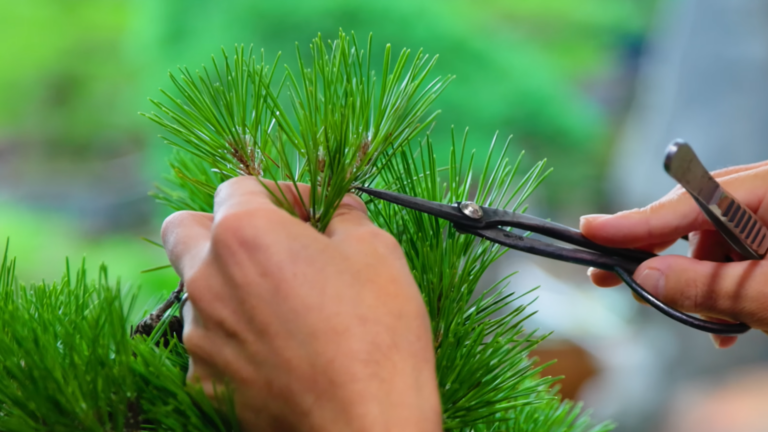
Use bonsai scissors for routine shortening of small branches and slim trimming scissors for detailed work on buds or dense foliage. Cutting along a branch to adjust its length and removing it at its base are different jobs.
For more on differences in shape and use, see our guide to choosing bonsai scissors, with three models compared, and our guide to choosing bonsai trimming scissors.
Pruning Shears for Shortening Thicker Branches
When a branch is difficult to cut with bonsai scissors, pruning shears with suitable cutting capacity are an option for shortening it. A concave cutter is used when the task is to remove the branch at its base.
Knob Cutters for Remaining Stubs and Wound Refinement
A knob cutter uses rounded blades to remove remaining projections and shape a recessed wound. While a concave cutter is the main tool for removing a branch, a knob cutter is useful for working on what remains afterward.
Some round-edge concave cutters combine these functions. Consider adding a knob cutter when there are areas you regularly want to refine further after using your existing concave cutter.
What to Look for When Choosing a Concave Cutter
1. Check the Thickness at the Branch’s Base
Measure the branch where the blades will actually cut, rather than judging it by the thinner growth near its tip. Use that measurement to check the stated cutting capacity. Overall length describes the tool’s size; the cutting guideline describes the branch thickness it is intended to handle.
Both Kikuwa models featured here have a cutting guide of living branches up to 10 mm thick. These figures refer to live wood; do not apply them to dead branches of the same thickness. Use a suitable saw or another appropriate tool for hard or thick branches.
2. Choose Standard or Round-Edge Blades for the Work
Standard concave cutters have relatively straight cutting edges. They are a good starting point for a first concave cutter when your main task is removing unwanted branches at their base.
Round-edge models suit users who want to take wound refinement into account when choosing a branch-removal tool. The Kaneshin No. 4 combines rounded tips with blades thinner than those of its straight-edge type, a design intended to reduce subsequent reshaping with a carving knife or similar tool.
3. Choose Material According to Rust Resistance and Budget
Steel models need dirt and moisture removed after use and protection with suitable oil before storage. Stainless steel is an option when rust resistance is a priority.
The Kikuwa 1204 and 3201 are both standard models with the same cutting guide of living branches up to 10 mm thick. Since both serve the same purpose, consider how much you want to spend on a more rust-resistant material.
Sharpness and cutting capacity are not determined by the material name alone. Compare material in terms of rust protection and price, and blade shape in terms of the task and the cut it leaves.
4. Look at the Cutting Head as Well as Overall Length
To judge whether the blades will fit at a branch’s base, consider their width and thickness and the spacing of surrounding branches as well as overall length. For very small bonsai or densely spaced branches, compact models or those with narrower cutting heads can be easier to match to the available space.
The three models featured here are large sizes measuring 200–205 mm overall. Check that there is enough space to position the cutting head at a branch’s base. At these similar overall lengths, blade shape and material are useful points of comparison. When buying online, check photos that clearly show the cutting head and its dimensions. Compare the handles with a familiar tool to judge their size.
Three Concave Cutters for Different Priorities
The Kikuwa 1204 is a standard option for branch removal, the Kikuwa 3201 offers the same basic purpose with stainless steel, and the Kaneshin No. 4 has round-edge blades designed to reduce subsequent wound reshaping. These three models offer different choices in shape and material.
| Model | Shape, material and overall length | Who it suits |
|---|---|---|
| Kikuwa Concave Branch Cutter, Large 1204 | Standard; steel; approx. 205 mm | A first standard tool for removing branches |
| Kikuwa Stainless Steel Concave Branch Cutter, Large 3201 | Standard; stainless steel; 205 mm | Standard branch removal with rust resistance as a priority |
| Kaneshin Round-Edge Concave Cutter, Large No. 4 | Round-edge; steel; 200 mm | Branch removal with less subsequent wound reshaping |
Kikuwa Concave Branch Cutter, Large 1204 — A Standard First Choice

Approximately 205 mm overall and 186 g. This standard concave cutter removes unwanted branches at their base and reduces the projecting stub left behind. Its stated cutting guide is living branches up to 10 mm thick.
It is a good first concave cutter for reducing branch numbers and developing a tree’s structure. It suits users who want a standard tool for branch removal and are prepared to clean and protect a steel tool against rust after use.
If you prefer a more rust-resistant material, compare the current price with the 3201 below, which shares the same intended work and cutting guide.
Check price and availability on eBay
Kikuwa Stainless Steel Concave Branch Cutter, Large 3201 — For Rust Resistance

A stainless steel concave cutter measuring 205 mm overall and weighing 175 g. Like the 1204, it removes branches at their base, with a stated cutting guide of living branches up to 10 mm thick.
It suits users who want a standard branch-removal tool in a material that makes rust protection easier to manage. Rust resistance is a useful consideration for a tool that regularly comes into contact with moisture and sap.
When choosing between it and the 1204, compare the material and current price with their shared purpose in mind. Stainless steel still needs dirt and moisture wiped away after use.
Check price and availability on eBay
Kaneshin Round-Edge Concave Cutter, Large No. 4 — For Less Wound Reshaping

A steel round-edge concave cutter measuring 200 mm overall. Its rounded tips and blades thinner than the straight-edge type are its defining features. Kaneshin gives an approximate cutting guide of 7–12 mm for living branches.
The blade shape is designed to reduce the additional work of reshaping a cut with a carving knife or similar tool. It suits users who want to consider the finishing of the wound as well as the removal of the branch.
It is also an option as an additional tool if you already own a standard concave cutter and frequently refine wounds after branch removal. It is worth considering when branch removal and subsequent wound refinement are both part of your work.
Check price and availability on eBay
Using and Maintaining a Concave Cutter
1. Shorten a Long Branch Before Working at Its Base
Before starting, decide which branches to remove and which to retain. Match the timing and amount of pruning to the species and the tree’s condition.
If a long branch or its foliage obstructs the work, first shorten it with appropriate scissors, pruning shears or a saw to create room at its base. This makes it easier to see where to position the concave cutter and how much of a stub remains.
Approach from an angle where the blades will not strike the trunk or neighboring branches, and position them so they grip the branch securely. Make the cut by closing the blades. Avoid forcing a thick branch through the tips alone or twisting the tool to snap the branch off.
2. Refine Only What Is Needed, a Little at a Time
After removing the branch, inspect the remaining projection and the wound. If needed, refine them gradually with a knob cutter or carving knife, avoiding a large cut into the trunk in one movement. Even with a round-edge cutter, judge the finishing required from the actual wound.
The depth of the recess and any wound protection should be considered according to the species and wound size. Prioritize removing only what is necessary while protecting the retained trunk and branches, rather than assuming a deeper recess is always better.
Use an appropriate saw or another suitable tool for branches beyond the cutting guide or hard dead wood. Cut wire with wire cutters. Avoiding excessive force is particularly important for protecting models with thin blades.
3. Clean, Dry and Protect Before Storage
After use, remove sap and wood debris from the blades, then wipe away moisture. Check around the pivot as well as the cutting edges. For stubborn sap, use a cleaner suitable for cutting tools according to its instructions.
Protect steel with a light application of suitable tool oil, such as camellia oil, and store it in a dry place. Use the recommended oil for the moving joint too. If you work on a tree with suspected disease, disinfect the tool using a suitable method before moving to another tree.
Check for chipped edges, blade alignment and problems with opening or closing, as well as loss of sharpness. The shape and alignment of the opposing blades are important on a concave cutter. Consult the seller or maker about sharpening or repair if there is a problem.
Choose for the Work and the Cut You Want to Leave
First check the branch’s thickness at its base and the space available for the blades. Then choose between a standard tool for branch removal and round-edge blades designed to reduce subsequent reshaping. Material and budget can help you narrow the choice.
Consider the Kikuwa 1204 for a first standard cutter, the Kikuwa 3201 when rust resistance is a priority in the same basic shape, or the Kaneshin No. 4 when you want to consider branch removal and wound refinement together. Choose the tool for the work you plan to do.