Bonsai pruning shapes a tree by cutting back overgrown branches and thinning crowded growth. Start with small branches, checking which buds or side branches will remain after each cut.
When to Prune
Seasonal references here are for outdoor bonsai in lowland areas around Tokyo. Adjust the timing to your local climate and the tree’s growth.
For deciduous trees such as Japanese maples, just after natural leaf fall is a useful time to assess and tidy the branches. During the growing season, cut back new shoots once their leaves have hardened.
For conifers, early spring is one possible pruning period, but check the timing for your species and the work you plan to do. Bud pinching and decandling are separate from removing or shortening branches. For flowering and fruiting trees, check when flower buds form so you do not cut them off.
Avoid removing large amounts of foliage during extreme heat or severe cold, or while the tree is weak.
Which Branches to Cut and Keep
Look at the tree from the front and decide on the outline you want. Branches that disrupt the shape or branch arrangement are known as unwanted branches (imi-eda) and are candidates for removal.
| Branch condition | What to do |
|---|---|
| Long branches extending beyond the outline | Choose a bud or side branch to keep, then cut back to that point. |
| Inward-growing or crossing branches | Thin crowded areas so light and air can reach the branches you want to keep. |
| Weak branches you want to keep, and small inner branches | Keep enough leaves and buds on them. Inner branches can also provide a point to cut back to later. |
A branch allowed to grow temporarily to thicken the trunk or another branch, then removed later, is called a sacrifice branch (giseishi). If you are unsure about a branch, leave it and step back to look at the whole tree again.
Cutting Back to a Bud or Side Branch
- Follow the branch inward. Trace an overgrown branch from the tip toward the trunk and find a bud or small side branch to keep.
- Choose a growing direction. Keep a bud or side branch pointing the way you want new growth to go. On deciduous trees, look where leaves join the branch or where leaves used to be.
- Cut just beyond the bud or side branch. Avoid damaging the bud or the base of the side branch. Check the overall shape after each cut.
Pines and shimpaku junipers may fail to regrow and lose a branch if cut back into old wood with no foliage or buds. Check what foliage or side branches will remain before cutting.
Tools and Care After Pruning
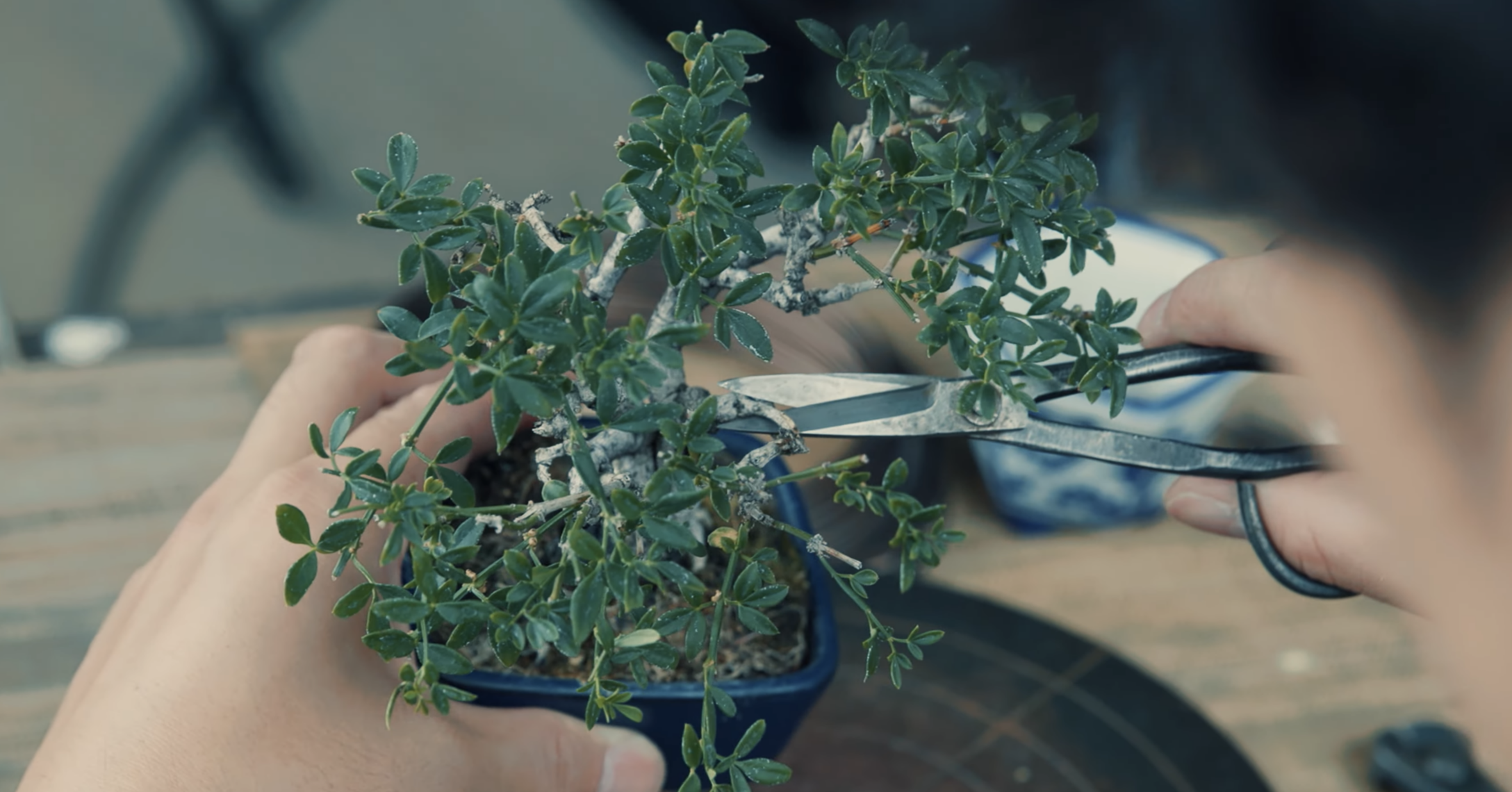
Use sharp bonsai scissors for thin branches, and an appropriately sized concave branch cutter for thicker ones. Removing a thick branch can change the tree’s shape considerably, so leave it if you are unsure.
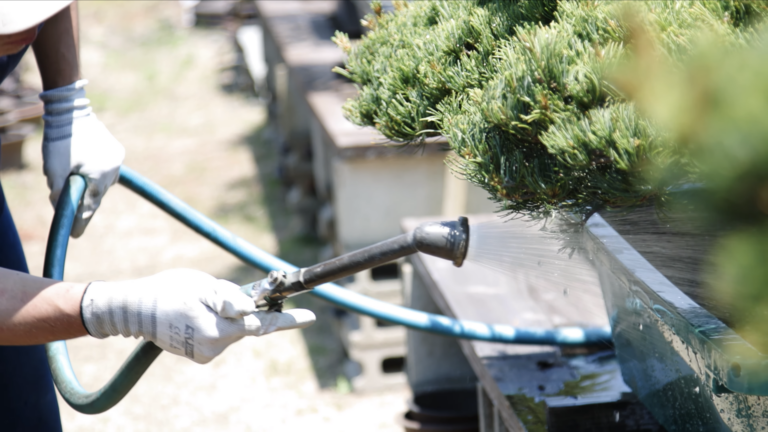
Continue to water according to the soil’s moisture. Removing a lot of foliage can change how quickly the soil dries, so do not add water while it is still moist.
For tool selection, see our guides to Bonsai Scissors and Concave Branch Cutters.
For watering advice, see Bonsai Watering. For an overview of daily care and seasonal work, see Bonsai for Beginners in our Bonsai Guide.
For autumn pruning of deciduous bonsai, see the video below.