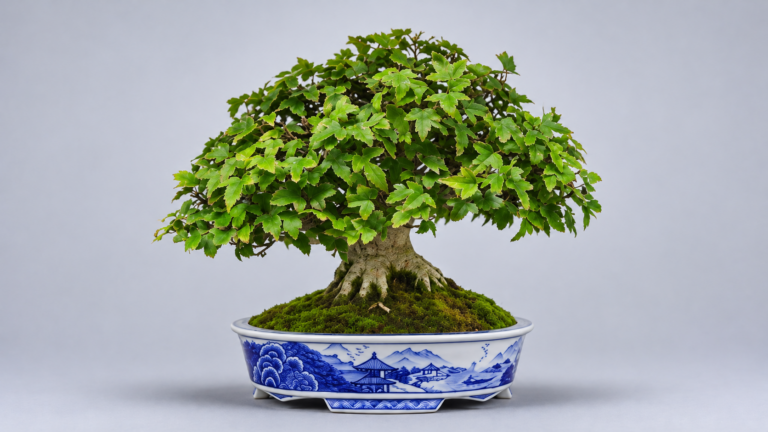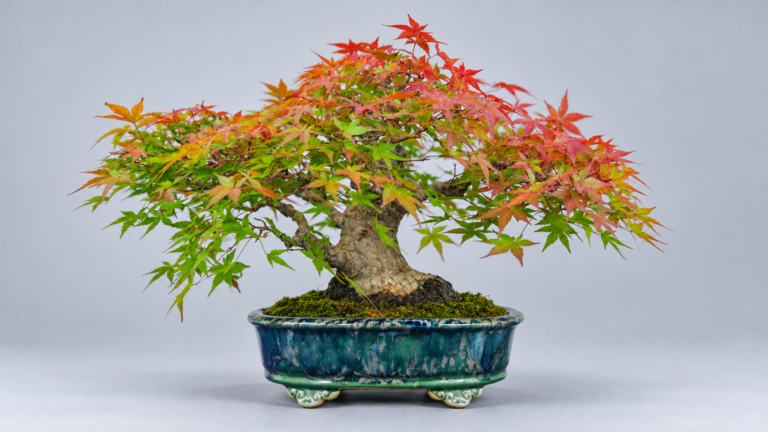
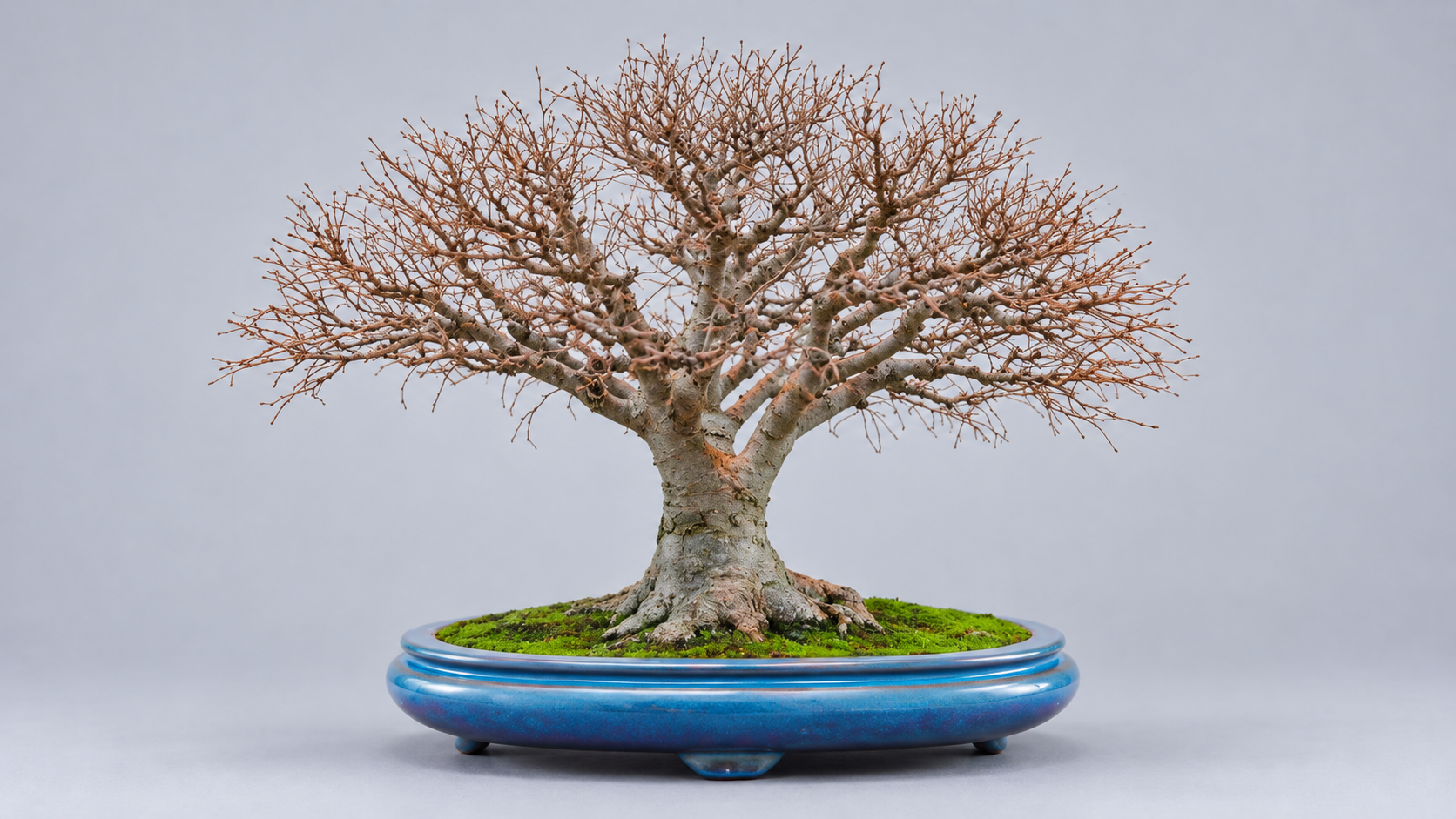
Japanese zelkova bonsai offer fresh spring foliage, yellow and red autumn color, and the fine branching revealed after leaf fall.
The characteristic broom style has a trunk that divides into fine branches spreading upward. Develop this delicate branching gradually by pinching and pruning the tips. Adjust the amount of work according to whether you are thickening the trunk and branches or maintaining established fine branching.
- Basic Care
- Japanese Zelkova Bonsai Care Calendar
- Shoot and Leaf Care
- Pruning, Wiring, and Branch Bundling
- Leaf Damage and Branch Dieback
Basic Care
Placement
Grow Japanese zelkova outdoors with good sunlight and airflow throughout the year. Provide enough sun to support spring growth as the buds open, and move the tree away from strong western sun and hot winds in summer. Use partial shade with morning sun or shade netting to prevent the leaves and pot from overheating.
Leave enough space between pots, as dense foliage can block light from reaching the inner and lower branches. Even after winter leaf fall, check how the soil is drying. Protect the tree under eaves or beneath a sheltered bench where it would otherwise face strong cold winds or prolonged freezing. Take particular care with shallow pots and small trees, and do not overwinter them in a heated room.
Read more about bonsai placement and sunlight
Watering
When the soil surface begins to dry, water thoroughly until water flows from the drainage holes. Zelkova uses plenty of water once its leaves have opened. Check the soil each morning and again at midday or in the evening on hot or windy days. Even when it rains, check that water has reached the soil beneath the foliage.
After defoliation or autumn leaf fall, the soil dries more slowly than when the tree is in full leaf. Judge the next watering by how that pot is drying rather than following a fixed frequency. Even when adjusting the interval, water the whole pot thoroughly each time. In winter, water when the soil is dry, at a time when it is not frozen.
Read more about watering bonsai
Fertilizing
Fertilize mainly in spring and autumn, adjusting the amount to the tree’s vigor and stage of development. Young trees being grown to thicken their trunks and branches need fertilizer to support growth. For a tree whose fine branching you want to maintain, too much fertilizer can encourage large leaves and long shoots. Even at this refinement stage, provide enough to maintain vigor.
Follow the product’s instructions and use an amount of solid fertilizer suited to the pot. After repotting, confirm that the tree has recovered before resuming. Reduce fertilizer according to the weather and the tree’s condition when growth slows during the rainy season or intense summer heat. Before defoliating, check that the tree is vigorous enough for the work. Fertilize in autumn after the heat eases, and stop as the leaves turn yellow and growth settles down.
Read more about bonsai fertilizer
Soil and Repotting
Use soil that drains well and allows air to reach the roots while retaining some moisture. Combine hard akadama with kiryu or similar components, choosing the mix and particle size to suit the pot and placement. In shallow pots, keep fine dust and broken-down soil from impairing drainage.
Repot in spring as the buds begin moving, before the leaves open. In Japan’s lowland Kanto region, this is roughly March. Roots grow readily, so check whether water is taking longer to soak in or the pot is densely filled with roots. Young trees and those with established branching need different repotting intervals. Judge by the roots and soil rather than treating repotting as a fixed annual task.
Loosen the root ball and trim damaged roots and long, running roots. Check the radial arrangement of the surface roots and how many fine roots will remain, avoiding excessive shortening of thick roots in one session. Secure the tree in the pot, then protect it from strong winds and late frosts while it recovers. Repotting after the leaves have opened is different from normal spring repotting; do not keep postponing the work beyond the usual window.
See the basic steps for repotting bonsai
Japanese Zelkova Bonsai Care Calendar
Use your local seasons and the tree’s stage of growth to decide when to work. Watch bud activity, shoot extension, the hardening of new leaves, and leaf fall. A tree being grown to thicken its trunk and branches needs a different amount of work from one whose fine branching you want to maintain. The Japan month reference below follows the lowland Kanto region.
Select a task to jump to its explanation below.
Japan reference (Kanto lowlands) · Spring Mar–May · Summer Jun–Aug · Autumn Sep–Nov · Winter Dec–Feb
Pinch selectively where shoots have extended, and avoid forcing cutback when summer heat has stopped growth. Defoliation is not a necessary annual task. Consider it only after new leaves have hardened, when the tree has sufficient vigor and good prospects for recovery.
Check for pests, disease, drying soil, and wire or string biting into the bark throughout the year. Treat fine-branch cleanup in autumn separately from cutback before spring bud growth. Avoid heavy cutting or major bends during the coldest part of winter.
Shoot and Leaf Care
Shoot Pinching and Cutback | Check the Direction of the Buds You Keep
As new spring shoots begin extending, start pinching where you want fine branching. Once a shoot has opened several leaves, pinch its tip with the aim of retaining two or three leaves near the base. Use your fingers or tweezers while the tip is soft, and scissors to cut back growth that has already hardened. In lowland Kanto, roughly April to June is the main reference window, with shoot growth guiding the timing.
Zelkova leaves and buds are arranged alternately, one at each node. Do not choose the cut position by leaf count alone. Check the bud at each leaf base and the direction in which it will grow. For a broom-style tree, retain buds that will let the branches spread naturally rather than adding inward-growing branches to crowded areas.
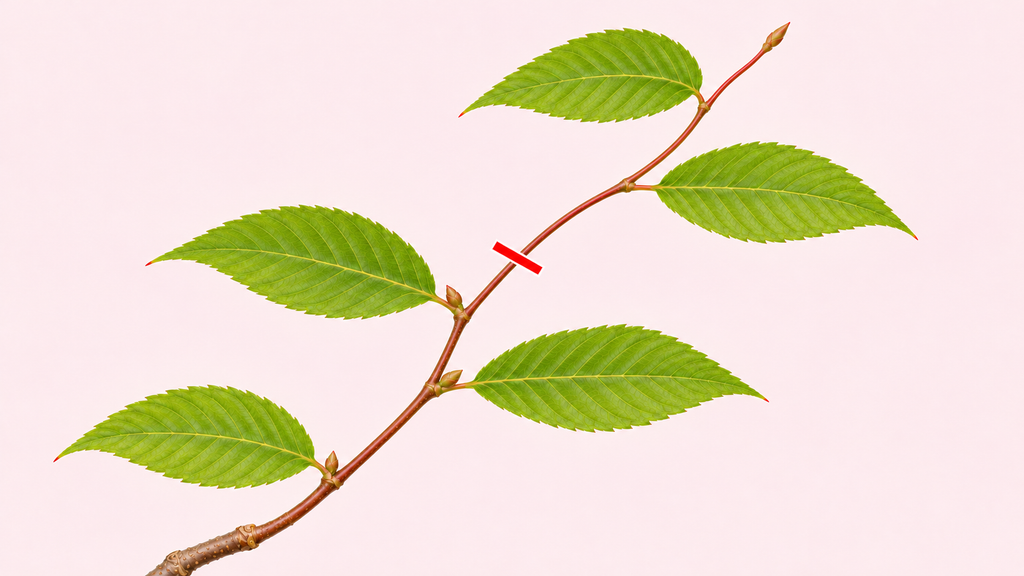
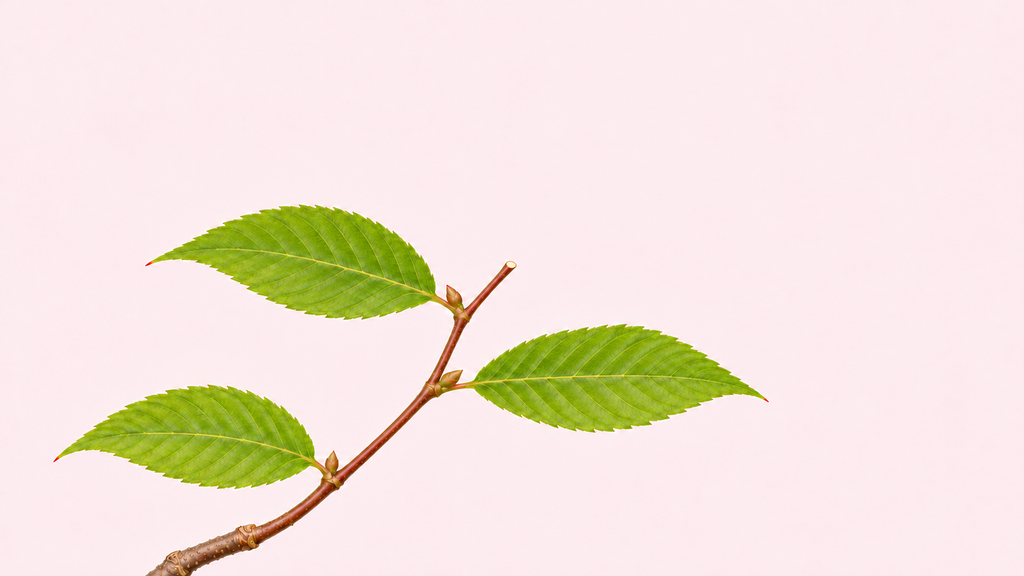
There is no need to cut vigorous upper and outer shoots to the same length as weaker lower and inner branches. Leave more leaves on weak branches and, where necessary, let them grow without cutting. If you want to thicken part of the trunk or a branch, choose shoots to leave growing rather than repeatedly pinching them straight away.
If only the tip buds keep extending strongly after cutting, control that growth as appropriate and reassess how much light reaches the inner buds and leaves. In summer, refine only the parts that need it, according to shoot activity and heat. From early autumn onward—September in lowland Kanto—avoid deep pinching and limit work to light adjustments of tips that extend beyond the outline. Do not cut back hard late in autumn to force immature new growth.
Leaf Thinning and Leaf Cutting | Bring Light to Inner Buds and Lower Branches
If overlapping leaves make the interior dark, select crowded, vigorous areas for leaf work once the new leaves have hardened. Use leaf thinning to remove selected large outer leaves, or leaf cutting to reduce part of a leaf blade while keeping the rest attached. Retain small leaves on weak lower and inner branches.
Zelkova has short leaf stalks, or petioles, with buds at their bases. When removing a leaf, use scissors at a position that protects the bud rather than trying to cut flush to the base. When cutting large leaves, do not automatically remove half of each one; adjust the amount to let light reach the leaves below. Avoid pulling leaves off in a way that damages buds or fine twigs.
Defoliation | Check Vigor and Stage of Branch Development
Defoliation uses the flush of growth after leaf removal to develop fine branches or balance vigor between branches. In lowland Kanto, roughly June, after the new leaves have hardened, is one reference point. The tree must be healthy and able to grow another set of leaves afterward.
Consider full defoliation—removing all the leaves—only on trees with sufficient vigor and enough branching. Do not use it on weak trees, those that have not recovered from repotting, or small trees with few branches and leaves. For older trees with established branching, prioritize selective leaf thinning or leaf cutting. Even when defoliating, adjust to each branch’s condition, retaining leaves on weak lower or inner branches as needed.
Because zelkova petioles are short, leave a small portion of the leaf base if cutting closer would risk damaging the bud. If you are inexperienced, handle leaves individually with scissors rather than stripping them off in handfuls. Do not decide on a fixed number of defoliations in advance. Before attempting full defoliation for the first time, ask a bonsai nursery to assess the tree’s condition and stage of development.
Care after Reducing Foliage
Reducing foliage changes how the tree uses water and how quickly the soil dries. Check the soil before watering rather than repeating the same frequency as before the work. Do not let the root ball dry out simply because there are fewer leaves, and water the whole pot thoroughly each time.
After the work, avoid strong sunlight and drying winds, and watch bud activity in a bright location. Refine the new shoots according to their relative strength and gradually restore sun exposure as the leaves mature. If buds are slow to respond, do not repeat defoliation. Reassess placement, drainage, and overall vigor.
Pruning, Wiring, and Branch Bundling
Pruning and Styling | Build the Outline with Fine Branches
Prune to refine the overall branching around autumn leaf fall, once the leaves have turned yellow and growth has settled, or before spring bud growth. In lowland Kanto, consider fine-branch cleanup around November to December separately from necessary cutback in late February to March, after the coldest weather has passed. Do not judge by the date alone: check bud activity, branch thickness, and the protection you can provide afterward.
Start by identifying dead branches, inward-growing branches, and crossing branches in crowded areas. Cut long branches back to suitable inner buds or small side branches. For broom-style trees, do more than trim the outside of the crown into a rounded shape. Consider the natural progression from trunk to increasingly fine branches and the spacing between them.
Treat major work, such as removing thick branches, separately from fine-branch cleanup. Large cuts can be conspicuous on zelkova, so remove unwanted branches while they are still thin and avoid taking off many thick branches in one session. If substantial cutback is necessary, consider the period before bud growth along with the tree’s vigor, and protect cuts with wound sealant as appropriate.
Read more about when and how to prune bonsai
Wiring | Gently Adjust Young Branches
Pinching and pruning are the main ways to develop zelkova branches. Use wire for light adjustments to branch direction or awkward bends. Work after leaf fall or before spring bud growth, when the branches are easier to see, and avoid heavy bending in the coldest part of winter. Another option is to adjust new shoots once they have become firm enough, roughly June to July in lowland Kanto, taking care not to damage their soft bases.
Even with young branches, support them and bend gradually rather than forcing them into place. During the growing season, branches can thicken enough for wire to bite in quickly. Check frequently, including areas hidden by leaves. Before the bark is marked, cut the wire off one turn at a time and rewire as needed.
Read more about choosing and using aluminum wire
Branch Bundling | Gradually Adjust the Spread of the Branches
On broom-style zelkova, young branches are sometimes gathered with string after leaf fall to adjust the angle at which they rise. This technique, known as branch bundling, is not necessary for every tree. Choose it according to branch thickness and spread. Do not try to pull stiff branches together all at once or tighten the ties enough to crush fine twigs.
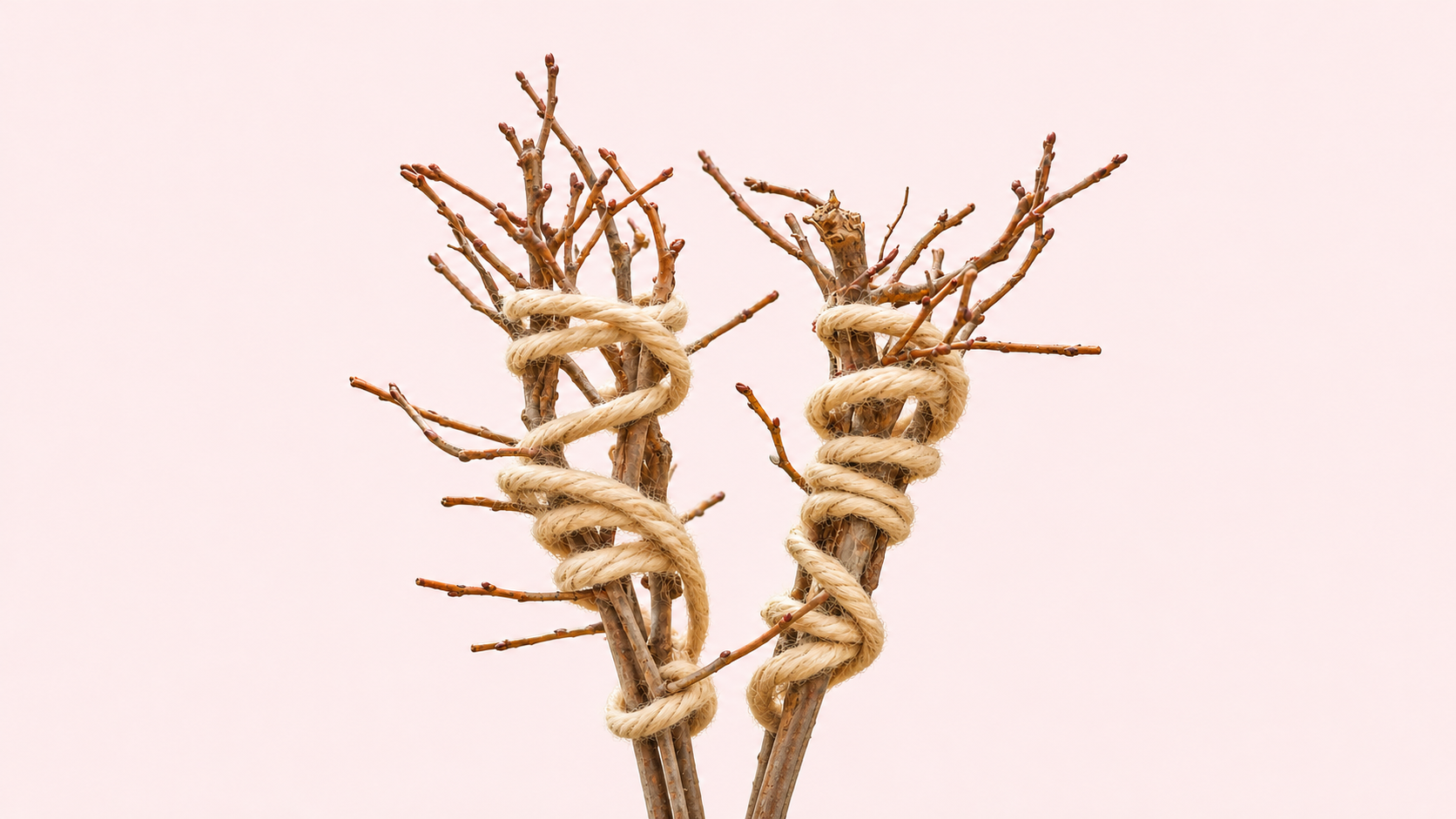
Protect bundled trees from cold winds and check for string biting into the bark or branches pressing against one another. In spring, remove the ties before buds begin extending and check the branches. Do not force trees with many thick or old branches into bundles; pruning and developing new branches can also be used to refine the shape.
Leaf Damage and Branch Dieback
When Leaves Turn Brown or Suddenly Wilt
First check how the soil is drying, exposure to strong western sun, pot temperature, and wind. Dense foliage and shallow pots can lead to sudden drying, but if the soil remains wet, check drainage and root condition before adding more water.
Rather than removing all damaged leaves at once to make the tree look even, adjust care while retaining leaves that still have green tissue. If an entire branch suddenly wilts or damage spreads, do not assume lack of water is the only cause. Ask a bonsai nursery to assess the tree.
When Inner or Lower Branches Weaken
Check whether overlapping outer leaves are blocking sunlight or airflow to the interior. Refine vigorous shoots at the appropriate time, and selectively thin or cut leaves once they have hardened. Retain foliage on weak inner branches so they can recover rather than reducing their leaves along with the stronger areas. Also watch for cold, drying winds in winter.
When Leaves Are Large and Shoot Tips Grow Long
Reassess fertilizer, sunlight, relative branch vigor, and whether the tree is at a stage where you want to thicken its trunk or branches. Strong shoots left to extend can thicken the branch tips, so pinch or cut back where you want fine branching. Develop more branches while maintaining vigor, adjusting the leaves and buds you retain.
When You Notice Insects on New Growth or Spots on Leaves
Watch for aphids on new spring growth and changes on the undersides of leaves or around branch bases. If spots or small areas of damage appear on leaves, first check the symptoms and how widely they are spreading. If using a pesticide, choose a product labeled for the tree and the pest or disease concerned, and follow its instructions.