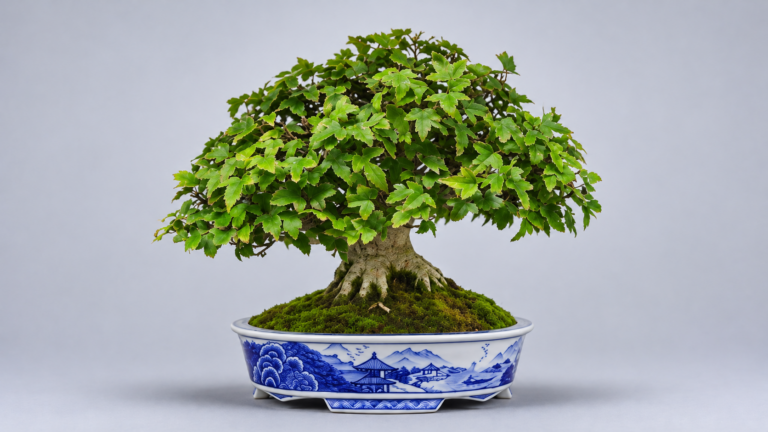
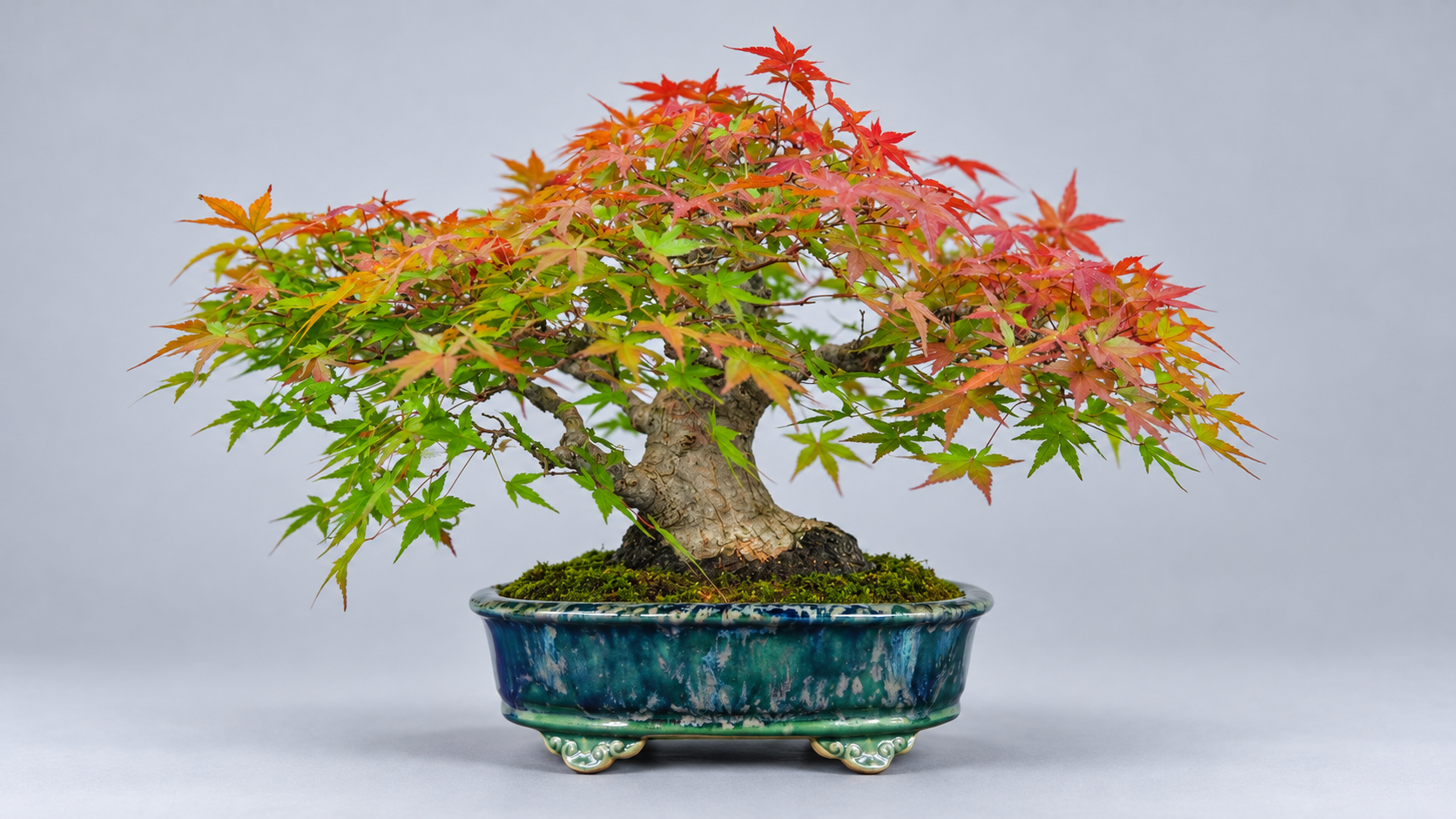
Japanese maple bonsai offer something to enjoy in every season, from spring buds and fresh green leaves to autumn color and the fine branching revealed after leaf fall.
Japanese maples, including iroha momiji and yama momiji, are widely grown as bonsai. Leaf color, shape, and vigor vary by cultivar. In spring, watch the emerging shoots as you refine the branch tips; in early summer, thin crowded foliage. Adjust the amount of work according to whether you are developing the trunk and branches or maintaining an established shape.
- Basic Care
- Japanese Maple Bonsai Care Calendar
- Shoot and Leaf Care
- Pruning and Wiring
- Leaf Damage and Autumn Color
Basic Care
Placement
Grow Japanese maple outdoors with good airflow throughout the year. Provide sunlight in spring and autumn. In summer, choose a spot with morning sun and shelter from strong afternoon sunlight. If strong western sun, hot winds, or an overheated pot are damaging the leaves, adjust the shade or placement.
Keep the tree outdoors through the seasonal changes in winter, providing protection under eaves or in a similar sheltered spot if it is exposed to strong cold winds or prolonged freezing of the soil. Watch for late frosts when buds begin growing in spring and after repotting.
Read more about bonsai placement and sunlight
Watering
When the soil surface begins to dry, water thoroughly until water flows from the drainage holes. Drying speed varies with the size of the pot, the amount of foliage, and the weather. Rather than following a fixed watering schedule, check the soil each morning and again at midday or in the evening on hot or windy days.
Dense foliage can prevent rain from reaching the soil inside the pot. Do not judge by wet leaves alone; check the soil’s moisture and drainage. In winter, the soil takes longer to dry, but water when needed during a time of day when the soil is not frozen.
Read more about watering bonsai
Fertilizing
Fertilize mainly from spring into early summer and again in autumn after the heat eases, adjusting the amount to the tree’s vigor and stage of development. A young tree being grown to thicken its trunk and branches has different needs from a refined tree whose fine branching you want to maintain. For an established tree, one approach is to begin spring fertilizing after the new leaves have hardened.
Follow the product’s instructions and use an amount of solid fertilizer suited to the pot. After repotting, wait for the tree to recover before resuming. Reduce fertilizer if growth slows during intense summer heat or the tree is weak. Stop autumn fertilizing as the leaves begin changing color and growth settles down.
Read more about bonsai fertilizer
Soil and Repotting
Use soil that drains well and allows air to reach the roots while retaining some moisture. Combine akadama with pumice or similar components, choosing the mix and particle size to suit the pot, placement, and usual drying rate.
Repot in spring as the buds swell, before the leaves open. In Japan’s lowland Kanto region, this is roughly late February to March. Do not repot simply because another year has passed. Look for changes such as water taking longer to soak in, roots filling the pot, or soil particles breaking down.
Loosen the root ball and trim damaged roots and long, running roots. Check the fine roots and the arrangement of the surface roots, avoiding excessive root removal in one session. Secure the tree so it cannot move after planting, then protect it from strong winds and late frosts while it recovers.
See the basic steps for repotting bonsai
Japanese Maple Bonsai Care Calendar
Use your local seasons and the tree’s stage of growth to decide when to work. Watch bud swelling, the hardening of new leaves, and leaf fall rather than relying on the month alone. Cultivar and vigor also affect how much work is appropriate. The Japan month reference below follows the lowland Kanto region.
| Autumn | ||
|---|---|---|
| Early | Mid | Late |
| Shade & placement While heat persists | ||
| Fertilizing After summer heat eases | ||
| Pruning & styling Time the work to leaf fall | ||
| Wiring Just after leaf fall; light adjustments | ||
Select a task to jump to its explanation below.
Japan reference (Kanto lowlands) · Spring Mar–May · Summer Jun–Aug · Autumn Sep–Nov · Winter Dec–Feb
Pinch shoots during the brief period when the first leaves begin opening, thin foliage once the new leaves have hardened, and time autumn pruning to just after leaf fall. A bar spanning several parts of a season does not mean the same task should be repeated throughout that period.
Not every task is needed every year. Defoliation, in particular, should be chosen according to the tree’s vigor, cultivar, and stage of development. Check for pests, disease, drying soil, and wire biting into the bark throughout the year.
Shoot and Leaf Care
Shoot Pinching | Control Spring Shoot Growth
Where you want fine branching, watch as the spring buds begin opening. When the soft central growing tip becomes visible between the first pair of leaves, pinch it out with your fingers or tweezers. Leaving that pair of leaves limits extension and helps prevent long internodes.
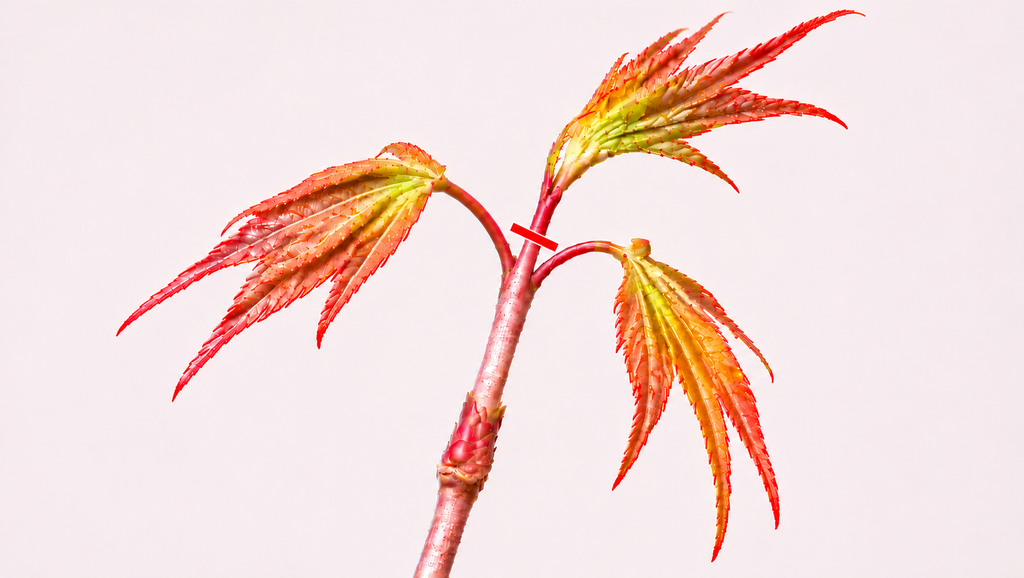
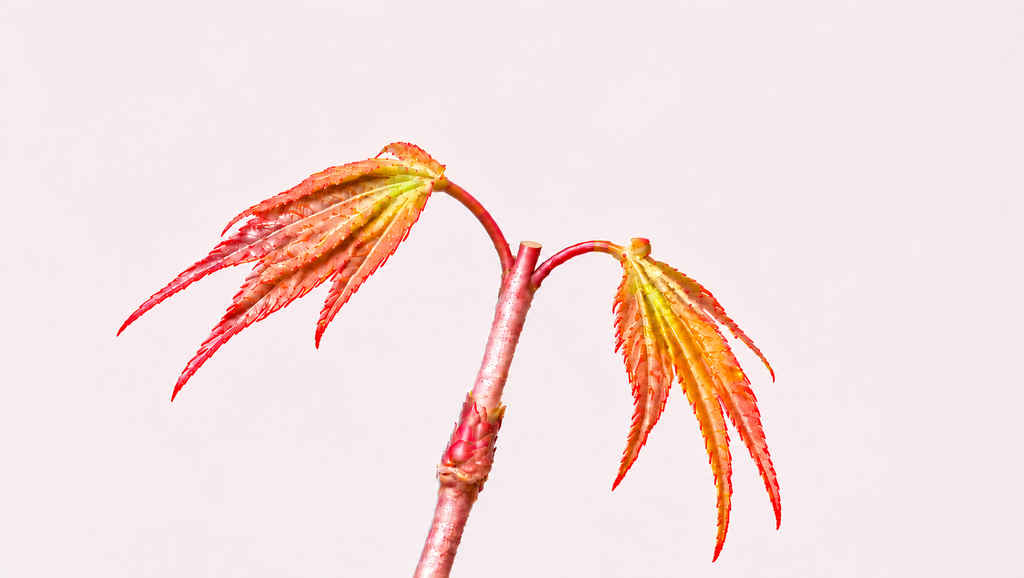
Buds do not all open at once, so check each branch individually. Do not pinch every shoot on weak branches or on branches you want to thicken or extend. Leave growth according to your goal, and take care not to damage the newly opened leaves or their bases.
Shoot Pruning | Check the Nodes and Buds to Keep
Shoots that have grown beyond the pinching stage, or branches that have become longer than intended, can be cut back once their new leaves have hardened. In lowland Kanto, May to June is one general reference. Check the positions of buds and small branches you want to keep before choosing the length and direction of the cut.
Where you want fine branching, keep a node with a useful bud close to the branch base. A node is the point where leaves or buds attach. Pinching the tip cannot shorten a long section between nodes, so cut back to a usable inner bud or small side branch instead.
After new shoots emerge, wait for their leaves to harden before refining only the areas that need it. If intense summer heat has slowed the tree’s growth, or a branch is weak, allow it to grow and prioritize recovery.
Leaf Thinning and Leaf Cutting | Bring Light and Air Inside
Once the new leaves have hardened, selectively thin crowded areas if overlapping leaves prevent light from reaching the interior. In lowland Kanto, May to June is a general reference. Work with the aim of protecting leaves on weak branches and inner buds you may want to develop.
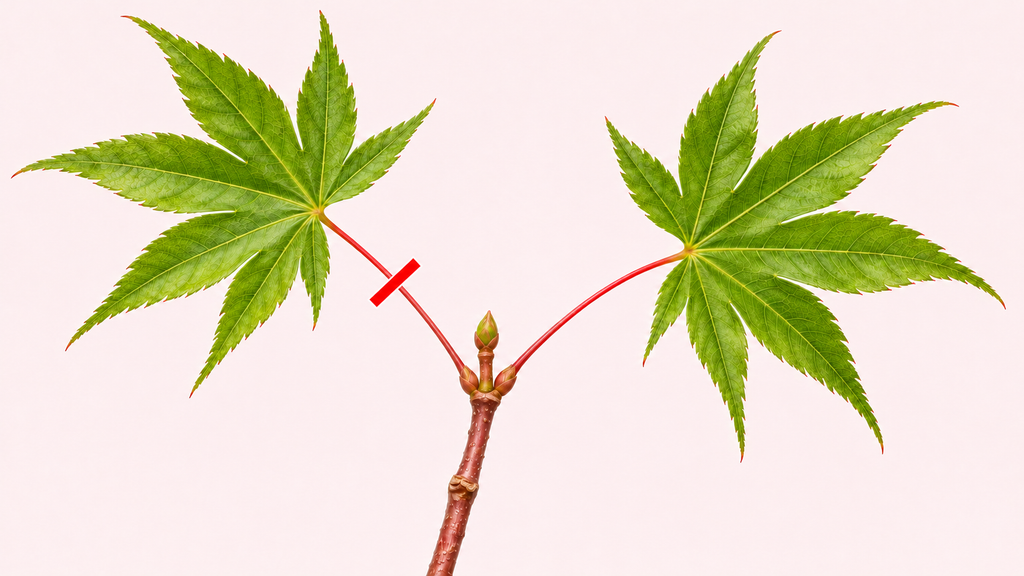
Leaf thinning means selecting leaves, such as one of an opposite pair, and cutting their stalks, or petioles, with scissors to reduce the amount of foliage. Start by checking large outer leaves and avoid damaging buds at their bases. You do not need to remove the same number of leaves from every branch.
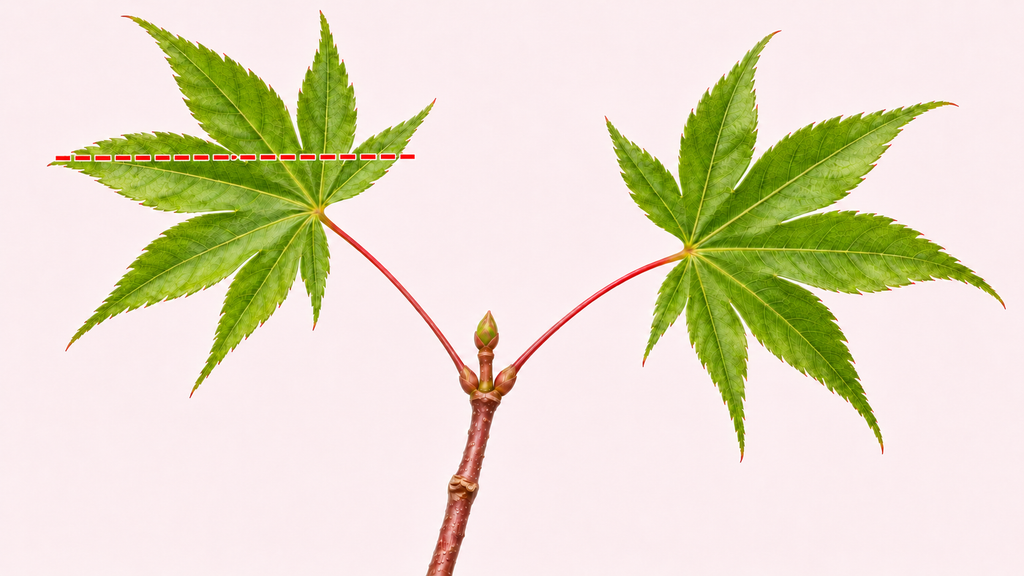
Leaf cutting reduces the area of a leaf by trimming part of its blade while leaving the rest attached. Choose between leaf thinning and leaf cutting according to the amount of overlap and the strength of each branch, taking care not to remove too much green foliage at once.
Defoliation | Check the Tree’s Vigor and Your Goal
Defoliation removes leaves so that the shoots and leaves that follow can be used to develop the branching. Removing all the leaves is called full defoliation. It may be considered in early summer, once the new leaves have hardened, on a tree with sufficient vigor, but it is not a necessary annual task for Japanese maple bonsai.
The response varies with the tree’s age, cultivar, and stage of development. Defoliation can weaken a Japanese maple or cause fine branches to die back. Avoid casually fully defoliating a weak tree, one that has not recovered from repotting, or an old tree with well-developed fine branching. Use selective leaf thinning or leaf cutting to make adjustments instead.
If you are new to the work, begin by removing just a few leaves from crowded areas. Before considering full defoliation, ask a bonsai nursery to assess the cultivar and the tree’s condition to help you decide.
Pruning and Wiring
Pruning and Styling | Refine Branches Just after Leaf Fall
For pruning that adjusts the branch structure and length, just after leaf fall is one general guide. In lowland Kanto, this is roughly November to December, but follow the tree’s actual leaf fall rather than the calendar. Once the bare branches are visible, decide which to keep and remove crossing branches, crowded growth, and overly long extensions.
Japanese maples can bleed sap from pruning cuts at certain times, so do not assume that any time during winter is equally suitable simply because the leaves have fallen. Pruning before spring bud growth is another approach, but consider branch thickness, the amount of work, the tree’s vigor, and the protection you can provide afterward.
When shortening a long branch, check for inner buds or small side branches that can be kept. Treat major changes, such as removing a thick branch, separately from light refinement of fine branches. Protect larger cuts with wound sealant as appropriate, and avoid making many large wounds in one session.
Read more about when and how to prune bonsai
Wiring | Adjust Branch Position without Damaging the Bark
Make light adjustments to branch direction and position in early summer after the new leaves have hardened, or just after leaf fall. Japanese maple bark can retain wire scars, so start with small adjustments to fine branches. Support the branch as you bend it gradually, avoiding forceful bends or repeatedly bending the same spot.
During the growing season, branches can thicken enough for wire to bite in quickly. Rather than setting a fixed removal date, check regularly and cut off the wire one turn at a time before it marks the bark. Even after leaf fall, avoid rushing into major bends. Refine the branching gradually through pruning and gentle positioning.
Read more about choosing and using aluminum wire
Leaf Damage and Autumn Color
When Leaf Tips Turn Brown
Strong sunlight, hot winds, or a lack of water can damage leaf tips and margins. First check how the soil dries, afternoon sunlight, pot temperature, and exposure to wind. If the soil stays wet, also review drainage and the condition of the roots.
Observe new buds and branches as well as damaged leaves. Do not remove all the leaves simply to make the tree look even. Keep leaves that still have green tissue while adjusting placement and watering. If an entire branch suddenly wilts or discoloration spreads, ask a bonsai nursery to examine the tree.
When Autumn Color Is Uneven
The timing and appearance of autumn color vary with the cultivar, individual tree, temperatures that year, sunlight, and leaf damage. Keep leaves healthy through summer and reassess sun exposure once autumn heat eases. Continue checking the soil and watering as needed while leaves remain on the tree.
When You Notice Insects or White Powder on Leaves and Buds
Aphids may appear on tender spring growth. Also watch for insects on leaf undersides and white, powdery patches. Inspect the undersides of leaves and branch bases, noting where symptoms appear and how they spread. If you use a treatment, choose a product approved for the tree and the target pest or disease, and follow its label.