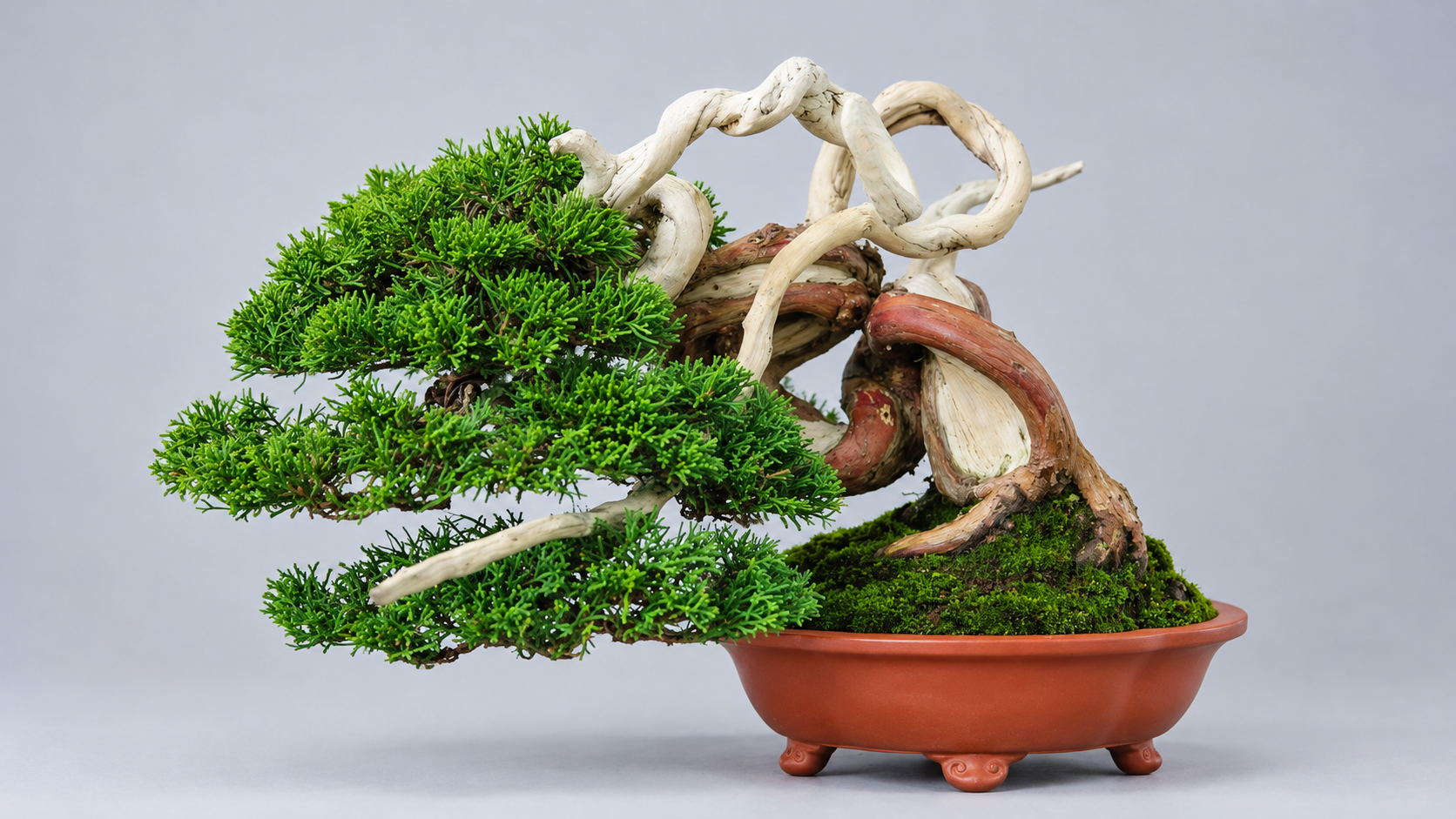
Shimpaku juniper bonsai are valued for their fine green foliage and trunks with curves and twists.
An evergreen in the cypress family, shimpaku has tiny, overlapping scale-like leaves that form its branch tips. White deadwood on the trunk is called shari, while deadwood branches are called jin. Their combination with the living trunk and green foliage is part of the tree’s appeal. Provide sunlight and good airflow, and selectively trim elongated shoots and crowded branches.
- Basic Care
- Shimpaku Juniper Bonsai Care Calendar
- Foliage and Shoot Care
- Pruning and Wiring
- Jin and Shari
- Juvenile Foliage and Changes in Leaf Color
Basic Care
Placement
Grow shimpaku outdoors in a sunny spot with good airflow throughout the year. The branches and foliage can become dense, so leave space between pots. If intense afternoon sun makes the pot very hot in midsummer, adjust the location or soften the afternoon sunlight.
In winter, avoid places exposed to strong cold winds or prolonged freezing of the soil. Provide protection under eaves or in a similar sheltered spot according to your local climate. Keep the tree in seasonal outdoor conditions rather than overwintering it in a heated room.
Read more about bonsai placement and sunlight
Watering and Misting
When the soil surface begins to dry, water thoroughly until water flows from the drainage holes. How quickly it dries depends on the size of the pot, the soil, and the weather. Check each pot individually rather than watering a fixed number of times.
Watch for drying out in summer, and check soil moisture and drainage during prolonged rain. In dry conditions, you can also wet the foliage when watering in the morning. Misting alone is not enough: make sure water reaches the roots. Even in winter, water if the soil is dry, choosing a time when it is not frozen.
Read more about watering and misting
Fertilizing
Feed mainly during the spring and autumn growing periods, adjusting to the tree’s vigor and stage of development. A young tree being grown to thicken its trunk and branches needs a different amount from a tree whose shape is already established. Watch the growth at the branch tips and adjust accordingly.
Follow the product directions for solid fertilizer and use an amount suited to the size of the pot. After repotting, wait for the tree to recover before feeding again. Reduce or pause feeding if growth slows in midsummer or the tree is weak. In autumn, stop feeding as temperatures fall and growth settles down.
Read more about bonsai fertilizer
Soil and Repotting
Use soil with good drainage and aeration. Combine akadama with materials such as Kiryu grit, and choose a particle size that suits the pot and how quickly the soil dries.
Spring, as growth begins, is a general guide for repotting. In Japan’s lowland Kanto region, this is roughly March to April. Do not repot simply because another year has passed. Look for changes such as water taking longer to soak in, roots circling inside the pot, or soil particles breaking down.
Loosen the root ball gradually. Avoid removing all the soil around the base at once or cutting the roots back heavily. After planting, secure the tree so it cannot move in the pot. Prioritize recovery and avoid combining repotting with other demanding work, such as heavy pruning.
See the basic steps for repotting bonsai
Shimpaku Juniper Bonsai Care Calendar
Use your local seasons and the tree’s stage of growth to decide when to work. Adjust for your climate and the tree’s condition, and choose only the tasks it needs. Let the spring shoots extend before pruning them; shoot work generally begins from early summer, depending on growth. The Japan month reference below follows the lowland Kanto region.
| Autumn | ||
|---|---|---|
| Early | Mid | Late |
| Selective shoot pruning Choose strong extensions | ||
| Foliage thinning After summer heat eases | ||
| Fertilizing | Fertilizing While growth continues | |
| Pruning & styling | ||
| Wiring | ||
| Winter | ||
|---|---|---|
| Early | Mid | Late |
| Major shari work After severe cold; before bud growth; protect afterward | ||
| Protection from cold winds & freezing According to local climate | ||
Select a task to jump to its explanation.
Japan reference (Kanto lowlands) · Spring Mar–May · Summer Jun–Aug · Autumn Sep–Nov · Winter Dec–Feb
For major shari work, late winter to early spring, before bud growth begins, is one possible window, provided you can protect the tree afterward. Choose the timing of small jin work and bark peeling according to growth and temperature. Small jin made from already-dead branches and cleaning existing jin and shari are less restricted by season.
Not every task is needed every year. During the growing season, avoid repeatedly pinching all the shoot tips, and leave growing tips on the branches you are keeping. Avoid heavy pruning and major bending during intense summer heat or severe winter cold. Check for pests, disease, and wire biting into the bark throughout the year.
Foliage and Shoot Care
Selective Shoot Pruning | Trim Elongated Growth
When new growth begins in spring, first let it extend and observe the tree’s vigor. From early summer onward, select strong shoots extending beyond the outline or branches that have grown longer than intended. Cut them back to a smaller side branch with foliage, leaving that side branch intact. Leave branches you want to thicken or extend further.
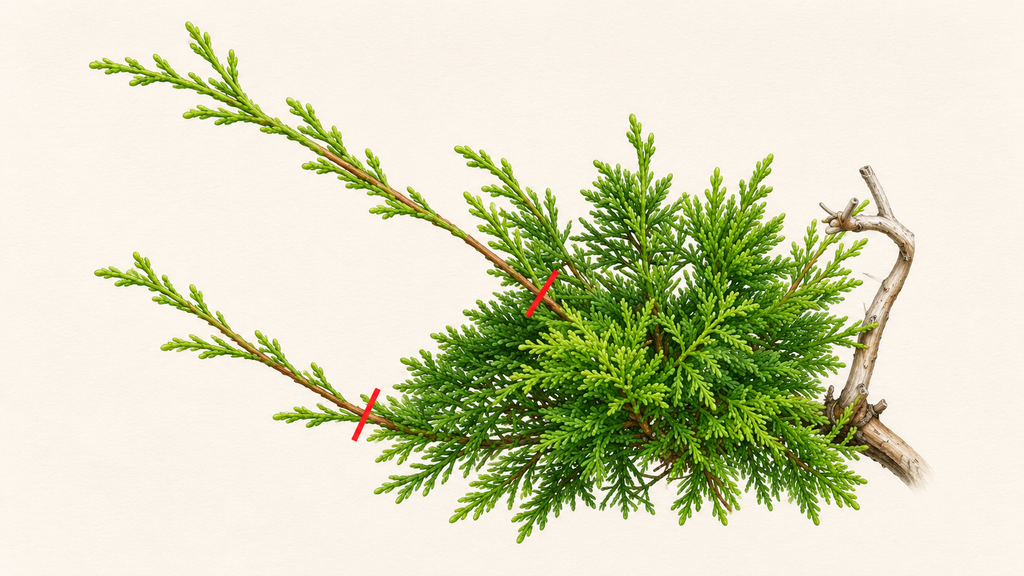
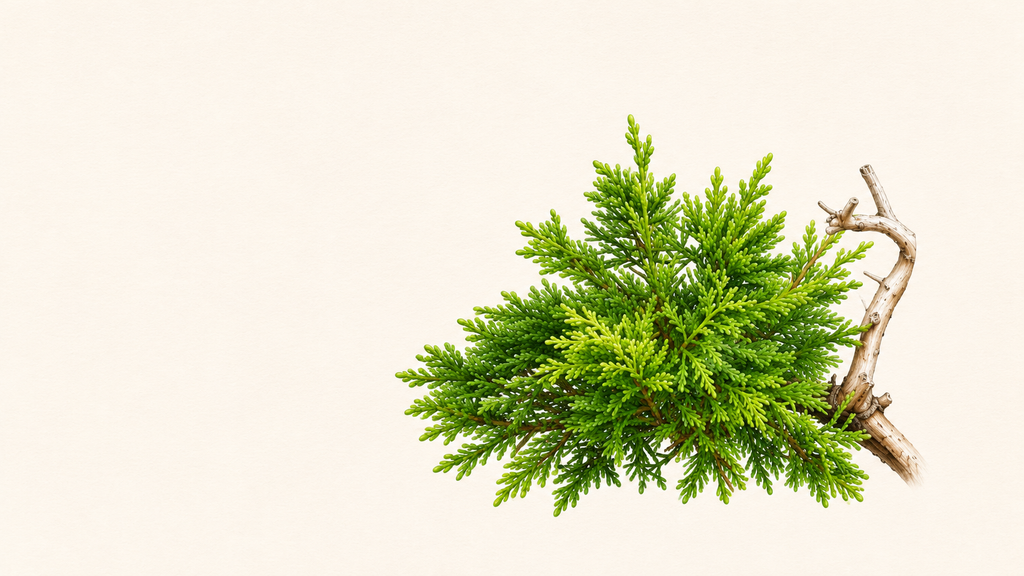
Shoot tips can also be pinched with the fingers, but repeatedly pinching every tip can weaken the tree. For beginners, using scissors to selectively trim elongated growth is easier to judge. Avoid shearing the foliage surface into a uniform outline; retain growing tips on the branches you are keeping.
After pruning, wait for the next extension and work again only when the relevant shoots have grown. If heat has slowed the tree’s growth, or a branch is weak, leave it to grow rather than cutting simply to make the outline even.
Foliage Thinning | Bring Light and Air Inside
Overlapping branches and foliage can block light from the interior. In late spring to early summer, or once summer heat eases, gradually remove dead foliage, old foliage accumulated at branch bases, and small downward-hanging shoots that crowd the interior. In lowland Kanto, the first of these windows is roughly May to June.
Older inner foliage that turns yellow is known as toya in Japanese. Removing dead toya makes the branch bases easier to inspect and improves airflow. Avoid removing too much green foliage at once. Keep the bright green growing tips and small inner branches you may want to use in the future.
Pruning and Wiring
Pruning and Styling | Keep a Leafy Side Branch
For larger adjustments to branch length and position, use autumn, after summer heat has eased, as a guide and check the tree’s vigor before working. First decide which branches to keep, then remove crossing branches and thin crowded areas.
Before shortening a long branch, check that there is a smaller side branch with foliage closer to the trunk. Make the cut just beyond that side branch so it remains. New growth is unlikely to emerge from old, bare wood, so avoid cutting back without leaving foliage. Spread work that would remove a large amount of foliage, such as cutting several thick branches, over separate sessions and allow the tree to recover between them.
Read more about when and how to prune bonsai
Wiring | Adjust Branch Direction and Position
Work mainly in autumn to adjust branch direction and position with wire. Support each branch and bend it gradually, avoiding repeated bending at the same point. Major bends in thick branches put considerable strain on the tree, so begin by adjusting the position of thinner branches.
After wiring, check for wire biting into the bark. As branches thicken during growth, the wire can cut in more quickly. Rather than following a fixed removal schedule, inspect it regularly and snip each turn to remove the wire before it bites in.
For help choosing wire, see our guides to copper wire and aluminum wire.
Jin and Shari | Working with Deadwood
Jin is a dead branch that has lost its bark, exposing the wood beneath. Shari is an area of deadwood on the trunk. These features suggest an old tree weathered by wind and snow, and their contrast with green foliage and living bark is part of the appeal. You can retain naturally formed deadwood or create it by working on unwanted branches or part of the trunk.
Choose the Timing to Suit the Work
For major shari work that removes bark or wood over a large area of the trunk, one possible window is after the harshest winter cold has passed but before bud growth begins. In Japan’s lowland Kanto region, this is roughly late February to March. Make sure you can protect the tree from cold winds and severe freezing afterward, and base the decision on its vigor and stage of growth.
Another approach is to create jin from unwanted branches or peel small areas of bark from spring into summer, when the bark separates more easily. In lowland Kanto, this corresponds roughly to April to July. Avoid periods when high temperatures have reduced the tree’s vigor, and do not work over a large area all at once during active growth. Small jin made from already-dead branches are less restricted by season and can be worked on according to their condition.
Preserve Live Veins and Work over Several Years
A live vein, called mizusui in Japanese, is a living strip of the trunk connecting the roots to the branches and foliage. Identify its position before starting, and avoid narrowing it too much or severing it. Damage to a live vein can cause the branches and foliage it supplies to die back. Begin with a narrow area, observe the tree’s response, and widen it gradually over several years.
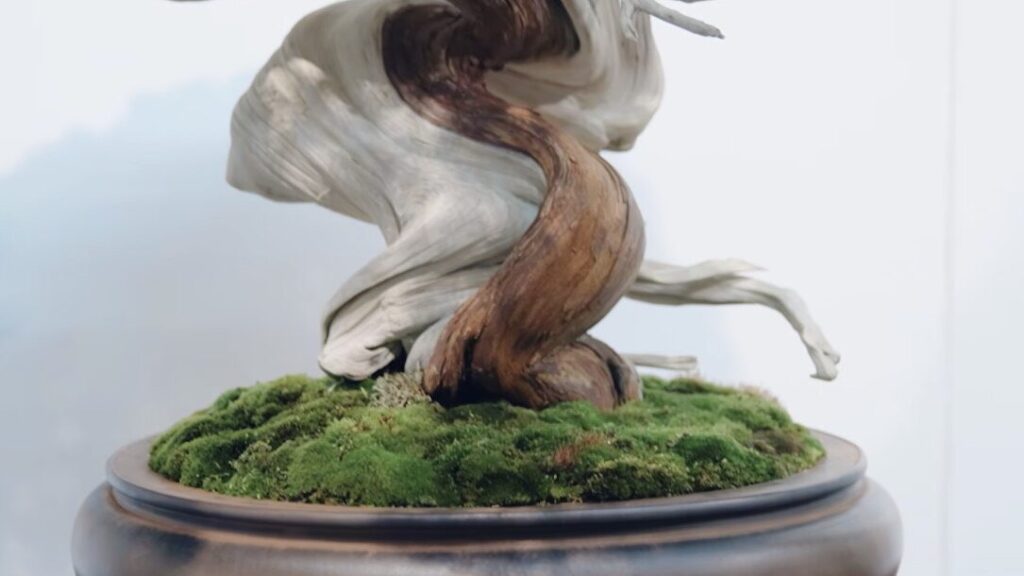
Work on a healthy tree that has fully recovered from previous work, and avoid combining deadwood creation with repotting, heavy pruning, or other demanding tasks. If you plan to work on a living trunk, having an experienced practitioner at a bonsai nursery assess the tree can help you make these decisions.
Cleaning and Protecting the Finished Deadwood
After carving, brush away wood fragments and dirt. If needed, use a product such as lime sulfur to protect and improve the appearance of the deadwood. Choose a product suitable for jin and shari, and follow its label for dilution and application timing.
Keep the product off the foliage, live veins, and potting soil. Follow the specified handling precautions, including gloves and eye protection where required.
Caring for Existing Jin and Shari
If dirt or moss builds up, gently clean the deadwood with water and a soft brush. Do this according to its condition rather than a fixed season, taking care not to damage adjacent live veins or the fine texture of the wood.
Juvenile Foliage and Changes in Leaf Color
When Pointed Juvenile Foliage Appears
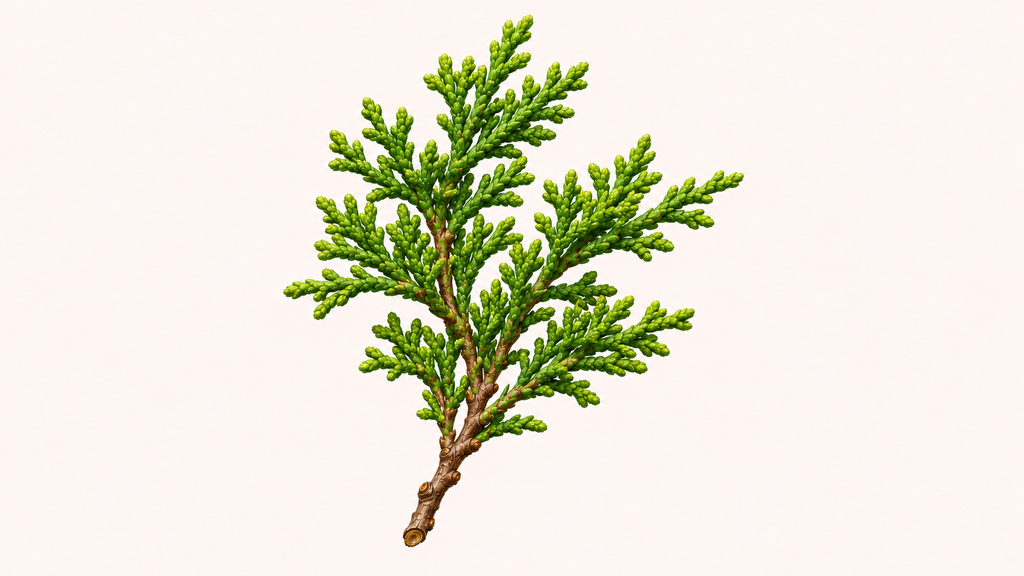
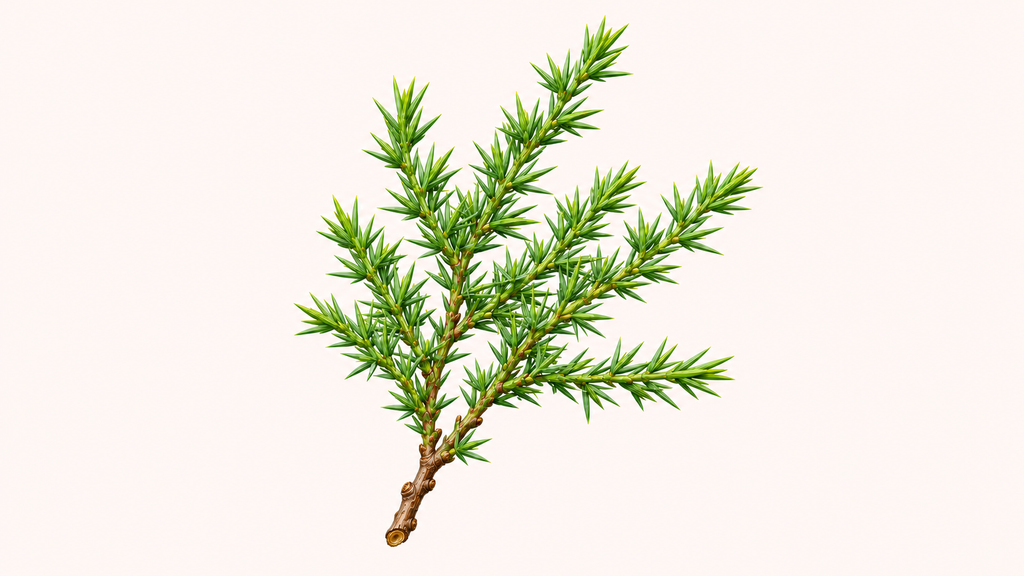
Pointed, needle-like leaves may sometimes appear in place of the usual scale-like foliage. This juvenile foliage is called sugiba in Japanese. It can appear after heavy pruning, excessive pinching, or major root disturbance. Some foliage types are more prone to it than others.
Do not remove all the juvenile foliage simply to make the tree look uniform. Leave it to support new growth. Review sunlight, watering, and how much work the tree has recently received, and allow it to recover without heavy work. The time it takes to return to normal scale foliage varies from tree to tree.
When Foliage Turns Yellow or Brown
If only the older inner foliage turns yellow while the outer growing tips remain healthy, it may be natural shedding of old foliage, known as toya. Winter cold can also give the foliage a bronze or brownish tint.
If the new shoot tips or entire branches also change color, check for drying out, excess moisture, poor drainage, insufficient sunlight, and signs of pests or disease. Inspect the undersides of the foliage and the branch bases. Recording where the discoloration begins and how it spreads can help narrow down the cause. If a tree suddenly weakens, have it assessed by the nursery you bought it from or another experienced bonsai grower rather than trying to restore it with fertilizer or pruning.