Use bonsai fertilizer during the growing season, adjusting the amount to the tree’s growth and stage of development. It supplies nutrients that are limited in a small pot.
When to Apply Bonsai Fertilizer
Japanese seasonal references are for outdoor bonsai in lowland areas around Tokyo. Use your local weather and the tree’s growth to decide when to feed.
| Conditions | How to feed |
|---|---|
| Growth resumes Japan: spring | Feed to support new shoots and leaves. For trees with an established shape, keep early-season feeding light to avoid excessive growth. |
| Summer heat Japan: summer | Reduce or pause feeding if heat slows growth. Healthy trees that are still growing may continue to be fed if they are protected from excessive heat. |
| Heat eases Japan: autumn | Continue feeding as growing conditions improve, helping the tree build reserves for the next growing season. |
| Dormancy Japan: winter | Pause feeding while the tree is dormant. Trees that keep growing in a warm climate need a feeding schedule suited to their species and growing conditions. |
If you plan to decandle or defoliate a tree, check the feeding schedule for that species and the work you intend to do.
Solid and Liquid Fertilizers
Solid Fertilizer
Apply it to the soil surface. Slow-acting organic fertilizer cakes, often made with oilseed meal, are commonly used for bonsai. If odor is a concern, a slow-release mineral fertilizer is another option.
Liquid Fertilizer
Choose a product suitable for bonsai and apply it to the soil at the dilution and frequency stated on the label. Do not make the solution stronger or apply it more often to try to get faster results.
How Much to Use and Where to Place It
Start with the amount recommended on the label for your pot size. Solid fertilizers vary in size and nutrient content, so check the application rate again whenever you change products.
A young tree being grown for a thicker trunk needs a different amount from a bonsai being maintained with fine branches and small leaves. Adjust feeding to the tree you want to develop; more is not always better.
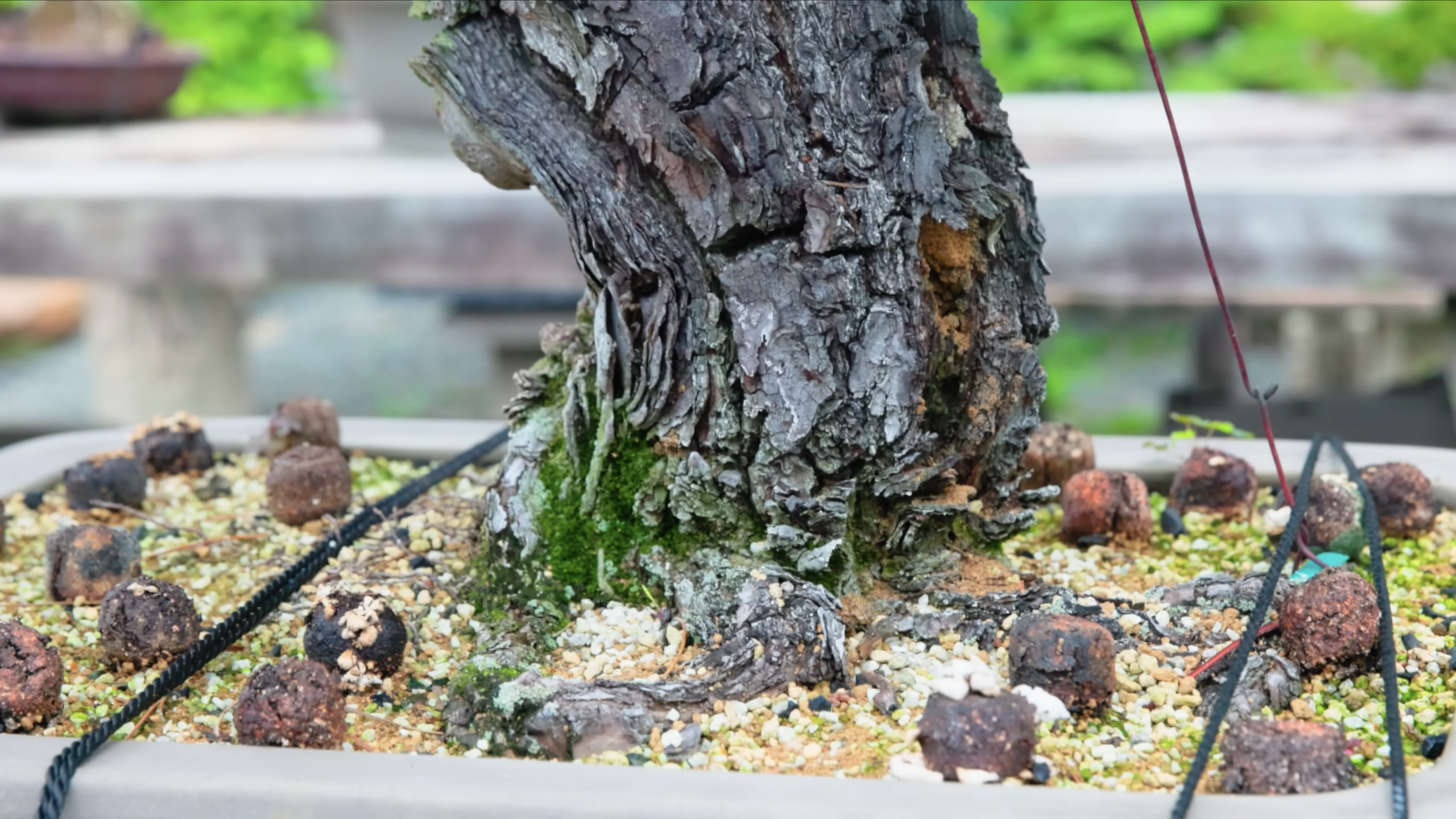
- Place solid fertilizer near the pot’s edge. Space it across the soil surface, away from the base of the trunk.
- Use fertilizer baskets if needed. They help keep the fertilizer from washing away or being taken by birds.
- Replace old fertilizer. Follow the product’s replacement interval, remove the old pieces and place new ones in slightly different positions.
As organic fertilizer cakes break down, they can leave a layer of residue that makes it harder for water to pass through the soil surface. Remove crumbled material before adding fresh fertilizer.
When to Pause Feeding
Pause feeding immediately after repotting that involves root pruning. As a general guide, wait about a month before feeding again, and longer if recovery is slow. Restart with a small amount.
Do not add fertilizer if leaves are wilting or the soil is taking unusually long to dry. First check for a lack of water, damaged roots or an unsuitable growing position.
For daily care, see Bonsai Watering and Bonsai Placement. For an overview of daily care and seasonal work, see Bonsai for Beginners in our Bonsai Guide.