
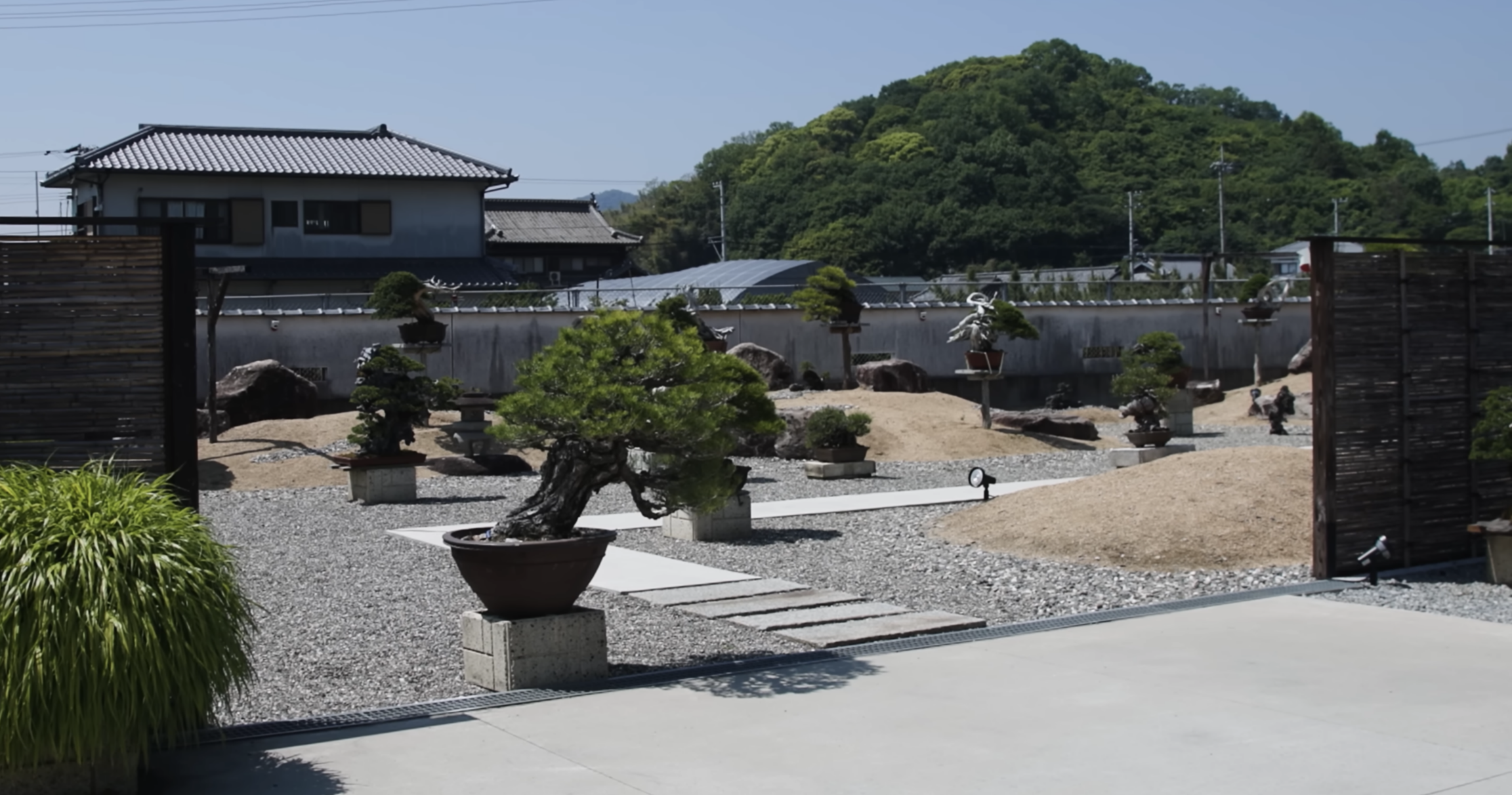
Four Generations of Bonsai in Kokubunji
Kokubunji, a district of Takamatsu in Kagawa Prefecture, is known for growing pine bonsai. Hiramatsu Shunshoen has been there since the Meiji era, and Koji Hiramatsu is the fourth generation of his family to run the nursery.
Hiramatsu is known in Japan and abroad for his work shaping bonsai, particularly his wiring. He has given demonstrations at the Asia-Pacific Bonsai and Suiseki Convention and the World Bonsai Convention, and has taught across Europe, North America, Asia and Australia. Enthusiasts overseas also ask him to come and care for their trees.
He also runs Bonsai no Takumi, a place where he can pass on the skills he’s spent years developing. He wanted more people to have the chance to work with bonsai and learn directly from professionals. Today, enthusiasts and aspiring bonsai artists come to Takamatsu from across Japan and around the world.
We visited Hiramatsu Shunshoen to see the nursery and find out how training works at Bonsai no Takumi.
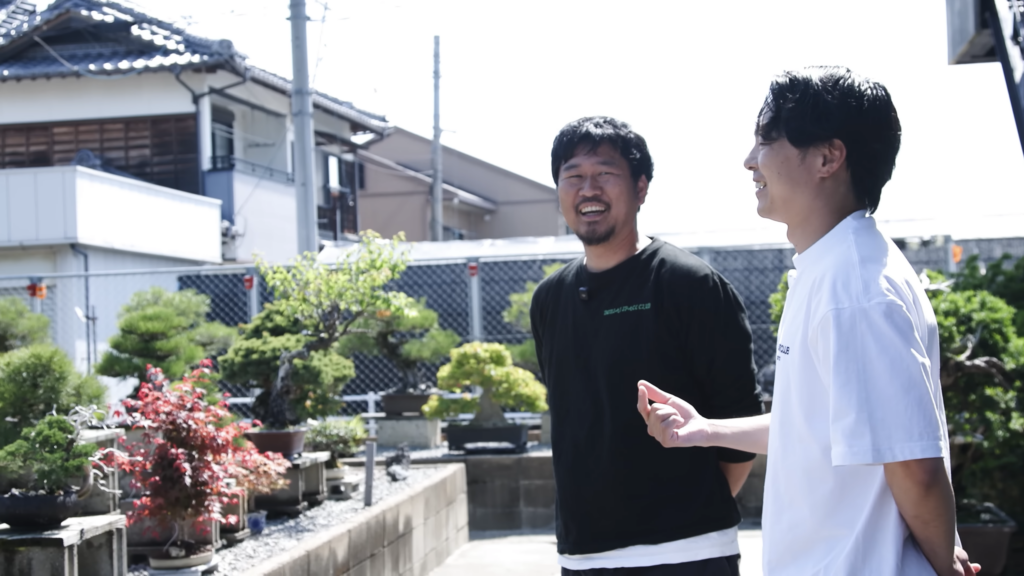
A Walk Through Hiramatsu Shunshoen with Toshi
Our guide was Toshi, an apprentice under Hiramatsu. The nursery works mainly with conifers such as Japanese black pine, Japanese white pine and Shimpaku juniper, in sizes ranging from small shohin to large bonsai. At the benches, we stopped to look at a slender-trunked Shimpaku in the literati style that had been shown at the Kokufu Bonsai Exhibition. Its bright green foliage stood out against the white shari, the exposed deadwood on the trunk.
If the foliage looks different than usual, Toshi considers whether the tree is getting enough water. He keeps an eye on each tree and adjusts its care to keep it in good shape.
Among the smaller trees, Toshi showed us some Zuiho Japanese black pines. He explained that their bark takes on the texture of an older tree relatively early. The nursery also has a greenhouse for work such as repotting and for sheltering trees that are sensitive to the cold.
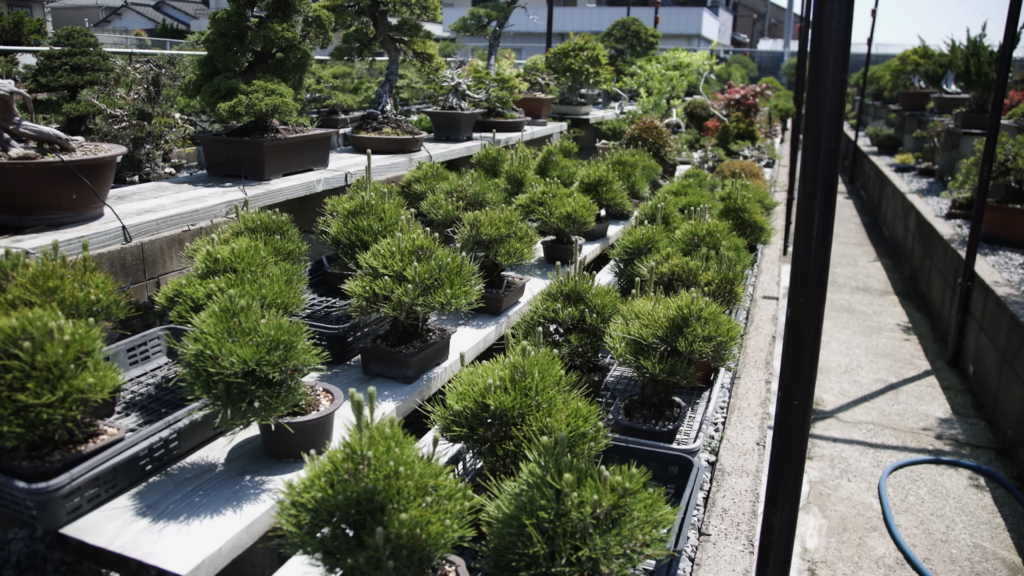
At the time of our visit, Toshi had been an apprentice for three years. He said it takes five or six years to get the basics of bonsai care down. Every tree is different, so you have to look closely at the one in front of you to decide where and how to work on it. That learning continues long after the apprenticeship, as you care for trees on your own.
Staying in Takamatsu to Learn Bonsai
Enthusiasts from overseas were already coming to learn at the nursery when Hiramatsu’s father, the third-generation owner, was in charge. He once took on an apprentice from Canada. As people kept coming to learn, Hiramatsu recalled thinking, “Why don’t we set up something like a school?”
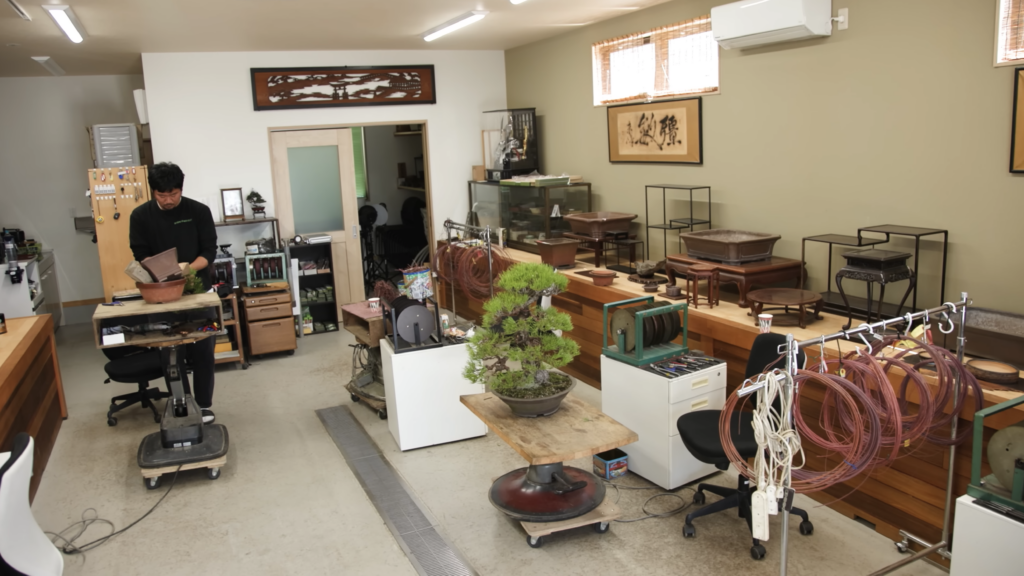
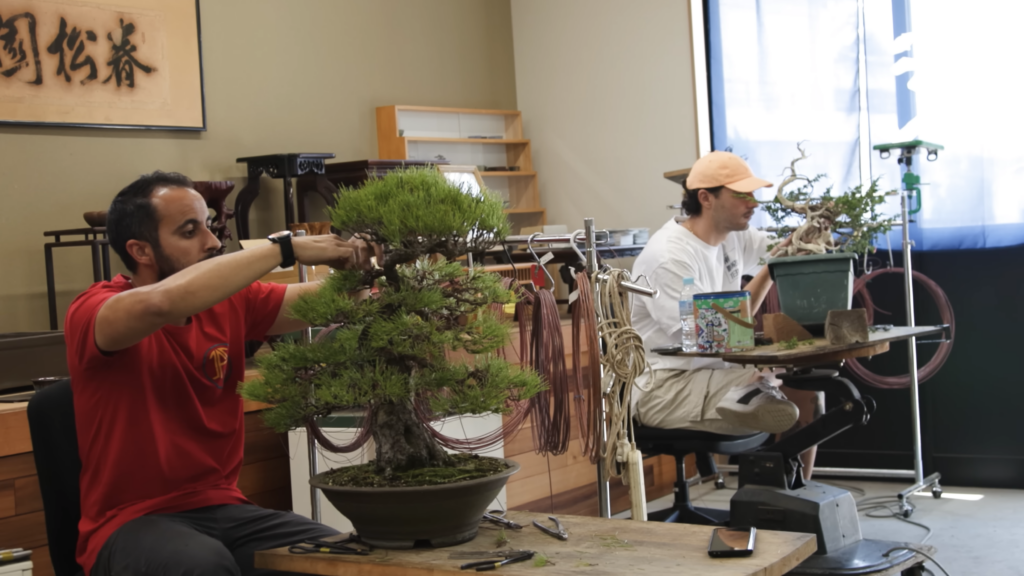
Bonsai no Takumi has a workshop and on-site accommodation. In the one-day beginner course, students learn what to look for when viewing a bonsai and how to care for it through the seasons. Intermediate and advanced students learn techniques such as wiring and repotting from bonsai professionals, with the work adapted to the season and their experience. Long-term students can stay for up to three months and use the workshop after class hours.
On the day we visited, two trainees from Spain were there, and we had a chance to speak with them.
Albert, from Barcelona, first heard about the program through a European bonsai YouTuber who had visited the nursery. When he met Hiramatsu, he found him easy to talk to. He was glad he could learn by working alongside him.
Jesús, from southern Spain, said a friend encouraged him to study in Japan. He found the program himself and got in touch. He came for three months. Staying longer, he said, lets him try different kinds of work as the weather and the seasons change.
Listening to them, we could see why people make the trip to Takamatsu. It’s a chance to learn by working alongside bonsai professionals and spend their days immersed in bonsai.
Honing the Craft and Passing It On
As the eldest son, Koji Hiramatsu grew up hearing that he would take over the nursery. He took it for granted, though at first he didn’t enjoy the work, with no days off. Over the decades, he found more room to do the work he wanted to do and gradually came to love bonsai.

When we asked Hiramatsu what bonsai was to him, he said, “You keep looking for the answer until the day you die.” The trees will outlive us. What do you aim for in the time you have with them? At the end of our conversation, he told us that when you’re born into a bonsai family, you want to reach the top of the craft.
Hiramatsu travels abroad to teach and welcomes people who want to learn at home in Takamatsu. What stayed with us after the visit was how he keeps working to improve his own skills while passing them on to the next generation.
Nursery Information
Hiramatsu Shunshoen
2365-2 Kokubunjicho Nii, Takamatsu, Kagawa 769-0101, Japan
Tel: +81-87-874-0335
For training details, visit the official Bonsai no Takumi website.
YouTube
Watch the tour of Hiramatsu Shunshoen and our conversations with the trainees and Koji Hiramatsu on YouTube.
