Watering cans and hose nozzles help distribute water throughout the soil in a bonsai pot. Choose a tool that suits your growing space, considering how it delivers water, the capacity needed for your pots, the distance from your water source and ease of handling.
This article contains advertising and affiliate links.
Uses / How to Choose / Models / Use and Care
What Are Watering Cans and Hose Nozzles Used For?
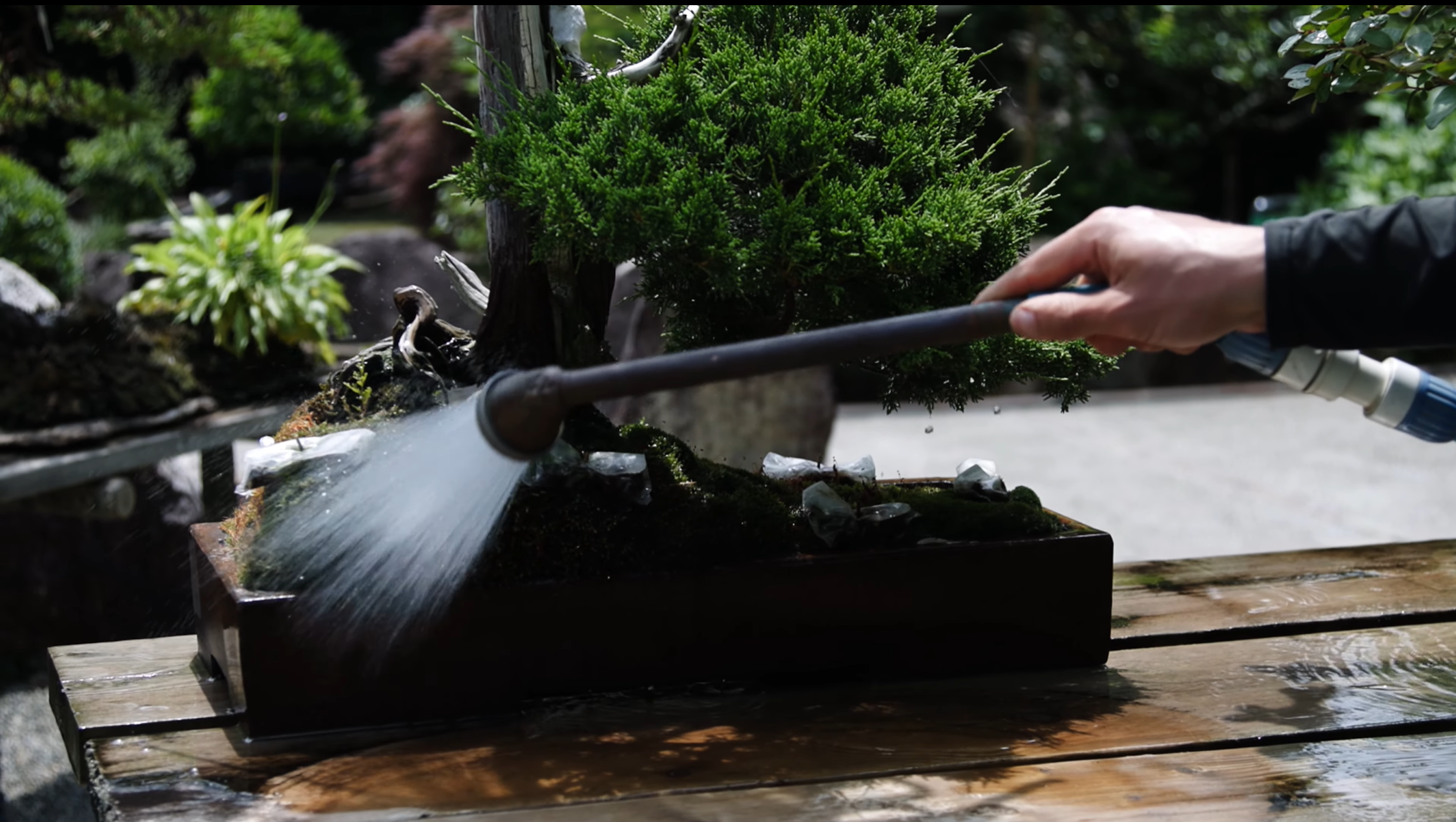
When watering bonsai, aim to wet the soil throughout the pot without washing it out of place. The perforated attachment at the end of a watering can or nozzle is called a rose. A fine spray makes it easier to water small pots gently.
A watering can carries water to places without a nearby tap and suits a small collection of pots. A hose nozzle connects to a hose, letting you water continuously without refilling. Consider not only the number of pots but also whether a hose can reach them and how far you need to go to refill a can.
How to Choose Bonsai Watering Cans and Hose Nozzles
Look for a fine spray that is less likely to wash soil out of the pot. Choose a spray pattern that suits the size of your pots and a tool that lets you adjust the flow easily.
For watering cans, choose a capacity that suits the number of pots and a spout length that suits your bench layout. A small can is easy to use for nearby small pots, while a long spout helps you reach pots at the back of a bench.
For hose nozzles, choose a fitting size that matches your hose, then compare weight and whether there is a flow-control valve at the handle. A mesh screen that can be removed for cleaning and replaced when damaged also makes maintenance easier.
Watering Cans and Hose Nozzles: Models
| Product | Type | Capacity / Size | Main Use |
|---|---|---|---|
| HAWS Handy Indoor Can 150/1 | Watering can | Small capacity | Watering a few small pots with control over the flow |
| Negishi Stainless Steel Long-Spout Watering Can No.4 | Watering can | Approx. 4 L / 100 cm long | Greater capacity and a long spout for pots farther back |
| Kikuwa Brass Nozzle with Replaceable Mesh, Small | Hose nozzle | 2811: approx. 350 mm / 2813: approx. 375 mm | Low weight or flow control at the handle |
HAWS Handy Indoor Can 150/1
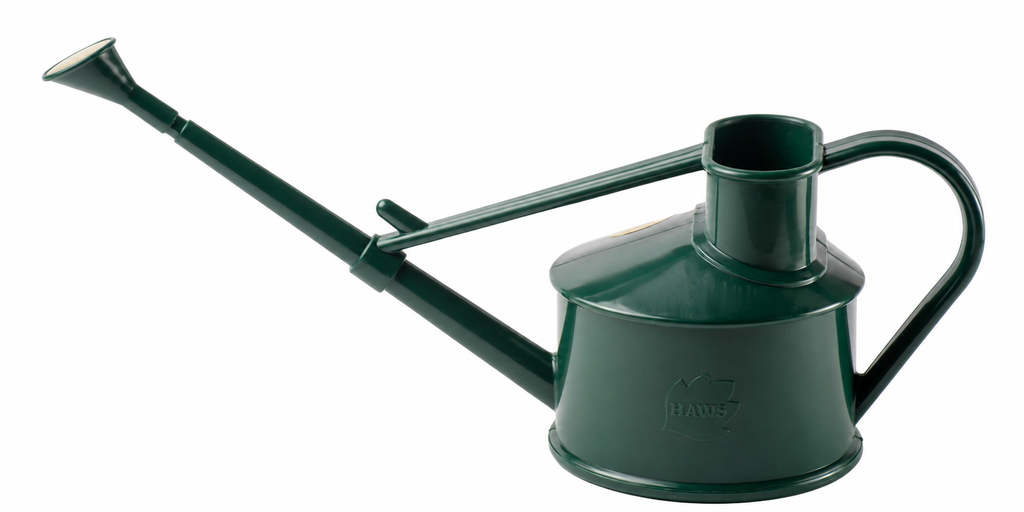
This small plastic watering can has a polypropylene body and a removable rose with a brass face. It is an option for carrying water to a few small pots and controlling the flow as you pour.
View the HAWS Handy Indoor Can 150/1 on eBay
Negishi Stainless Steel Long-Spout Watering Can No.4
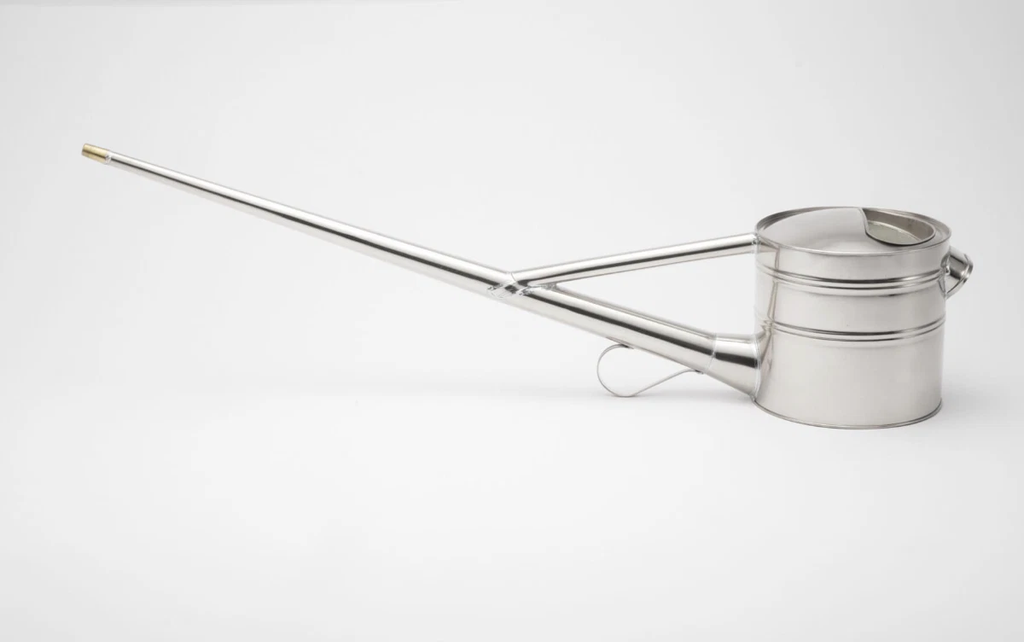
This stainless steel watering can has a capacity of around 4 L and an overall length of around 100 cm. Its long spout reaches pots farther away. The larger capacity makes it an option for watering pots at the back of a bench or several pots in succession.
View the Negishi Long-Spout Watering Can No.4 on eBay
Kikuwa Brass Nozzle with Replaceable Mesh, Small
This brass nozzle connects to a hose. The screw-on head can be removed so the mesh screen can be cleaned or replaced. Choose between the two versions according to whether you prefer lower weight or flow control at the handle.
Without a valve | No.2811

Approximately 350 mm long and 95 g. This version is an option when low weight is a priority. The flow is adjusted at the tap.
With a valve | No.2813

Approximately 375 mm long and 210 g. The valve at the handle lets you adjust the flow to suit each pot.
Using and Caring for Watering Cans and Hose Nozzles
Avoid watering on a fixed schedule. Check how the soil is drying and the condition of the tree. Drying rates vary with the species, pot size, season and airflow, so water when each pot needs it.
Adjust the flow before watering, then water gently across the whole pot. Misting the foliage alone is not a substitute for watering the soil.
If the spray becomes uneven or weak, wash the rose or mesh screen to clear any blockages. Replace damaged mesh, and empty the watering can after use before storing it.
The videos below also cover bonsai watering.
For other tools used in day-to-day bonsai care, see our bonsai tools guide.